Video Salon Between Two Wars | Group Exhibition
Video Salon Between Two Wars | Group Exhibition
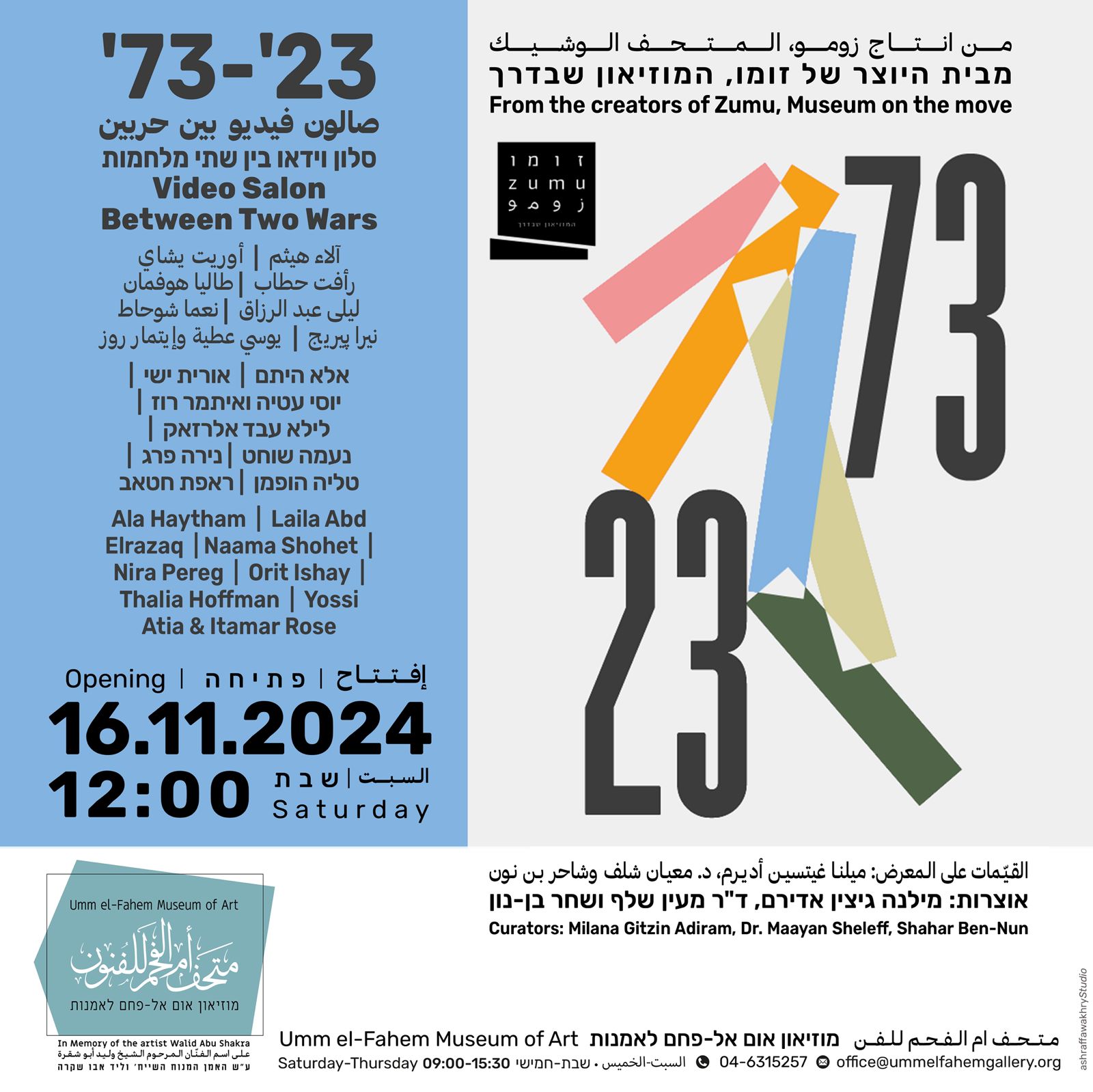
‘73-‘23: Video Salon Between Two Wars
From the creators of ZUMU — Museum on the Move
Participating artists: Orit Ishay, Nira Pereg, Thalia Hoffman, Naama Shohat, Laila Abd Elrazaq, Raafat Hattab, Yossi Atia and Itamar Rose, Ala Haytham
Curators: Milana Gitzin Adiram, Dr. Maayan Sheleff, Shahar Ben-Nun
On the seam between October 6, 1973 and October 7, 2023 — the line that links one failure to another — on the timeline between two traumas in which the national and the personal are interwoven — a wide-ranging project has been shaped and curated, presenting an anthology of 50 works of Israeli video art created between, during and in the wake of the two wars.
‘73-‘23: Video Salon Between Two Wars touches on the core questions that are troubling us all. It gives space to the growing anger, disappointment, dismay and frustration about a reality that keeps repeating itself; but it also leaves an opening for light, hope and measured optimism. It suggests confronting reality and directing our gaze to the pattern of the landscape of our lives — a landscape that is currently wounded, faded and bleeding. Nonetheless, it remains the landscape of the place in which we have chosen to live, create and act, and the character of which we are determined to fight for.
The works chosen for the project are about subverting the boundaries between the individual, the collective and the national in relation to political crises. They give space to complex dialogues and ask whether and in what form art should help cope with trauma that cannot be represented.
The collection on display at the Umm el-Fahem Museum of Art presents works that echo charged encounters, those that embody a conflict which provokes controversial thoughts and feelings in Israeli society. Several of the works use political imagination by reconstructing the past, intervening in the present or predicting the future, to make us think differently about a reality of ongoing trauma which we have become accustomed to perceiving as unchangeable. They tell personal and collective stories that cross borders of identity, language and territory, and thus seek to subvert our inherent underlying assumptions and crack the lines that define and bind us. They conjure up a glimpse into a different possible future, a future in which the balance of power changes and unexpected partnerships are forged.


