Written Testimonies

Oral Testimonies

My name is ‘Abd Al-Rahman Dawoud Ibrahim Ahmad Salama Mar’i Kabha, better known by the nickname “Abu Saddam.”

Year of birth: 1953

What did you study?

I studied political science at the Emek Yezreel College. I also studied religious studies and I am a licensed Islamic advocate.

Okay, please tell us a little about your family. Let’s start with your father, brothers, and sisters, and then ask about other things.

We were originally from Barta’a. My late maternal grandfather Muhammad Ahmad Salama Abu Jaber came to this region (Umm Al-Qataf) in 1905, at the beginning of the century. He resided in the northern region called Tawila. We came to the area later on. We came in 1943. Only my father came, my uncles are all in Barta’a. We owned land here so we came and settled here. The events of 1948 affected the entire region and many people were forced to leave, but [we stayed] thanks to my mother who kept us here and clung to the land. My father was missing for several months during the fighting and he appeared at the last moment. If he had come two or three days later, he would not have been included in the census.

Where was your father?

My father was with his family in Barta’a. And my mother insisted on staying at home, and she stayed. Praise be to God, Lord of the worlds. Thanks to my mother, we stayed in our village. Of course, at the beginning the family witnessed the transition between governments, and it was difficult. My father did not adapt to working as a laborer, so he bought a herd of cows. The truth is that we made a respectable living from cultivating the land and raising livestock. Of course, the military administration imposed restrictions.

How many brothers and sisters do you have?

We are 10 siblings – 5 brothers and 5 sisters, split equally.

What about your grandfather? 

My grandfather lived and died in Barta’a. He never came to Umm Al-Qataf.

What was your grandfather’s occupation?

My grandfather was one of the dignitaries of the Kabha family and he had an office for solving problems, enjoining good and forbidding evil. Indeed, my grandfather was a respected figure in Barta’a. He was considered one of the elders who played an important role in the village. My father and uncles grew up in that house, so we inherited the tendency to lead. I did not know my grandfather, but I lived with my maternal grandmother for about thirty years. He was, may God have mercy on him, a genealogist and a poet. I write poetry but in classical Arabic; he used to write in colloquial Arabic. When elections were held in Kufr Qari’, he described them in detail. He did not participate in the elections but they asked him to write a poem, so he wrote a beautiful poem.

Did he write anything about the 1936 revolt?

Yes, of course, about the 1936 revolt, the defeat of the British, and the famous Dhahrat Battle.

Okay, what did he write about it?

I remember an excerpt that says:

“The people of Barta’a answered the call on Thursday, and they came with sincere intentions

They attacked us with airplanes and drove us to the Dhahrat area.

What principle, what religion, helped them aim cannons at us

Until Hamid al-Din and the rest of the free leaders heard

They aimed cannons at us, and by God, we won

We came at the call of the Druze and we met them in the square

Register, oh history, how the British fled quickly from the entrance to Wadi Al-Samantar.”

Did he participate in the revolt?

He did not participate but he hosted the rebels Abu Durra, Abdullah Al-As’ad, and Abd Al-Rahim Al-Haj Muhammad at his home. All the great leaders of the revolt came to his home. He was supportive of the revolt but did not participate in person.

Did the British ever place a siege on the village or on his home? Or was he investigated?

The raids were well known, but our region was difficult to move around in, and it was far from the center and from the real activities … The British only passed by, but of course the raids were the result of informers. In other words, if an informer came and said that so-and-so was hosting rebels, then there would be a raid, and if there was no informing then they would not come. The British were violent. They were the first to start demolishing homes and to inflict collective punishment.
What is your full name?

Lotfi Awad Qasim Ahmad Mahamid.

Date of Birth:

I was born on 12/5/1930.

Personal status:

Married. I have 16 children, thank God.

You started a farming business. What did you grow?

During the time of the mandate: barley, wheat, sesame, eggplant, vegetables. We farmed on the land of Al-Lajjun.

How did people live during your childhood? How were the social relationships?

Excellent. I wish that today we had 1% of the ethics we had in the past for dealing with each other.

How was the division of lands, families, and neighborhoods?

Ighbariyya were in the north, Jabareen in the east, Mahamid in the southwest, and Mahajna in the west.

What are the branches of the Mahamid tribe?

Kiwan, Khader, Mas’ad, Hamed.

What do you remember from the 1936 revolt?

The British occupied the school. There was no other school in Umm al-Fahem aside from the Mahamid school. They occupied it and remained there for months. And the entire country was involved in the revolt.

Do you remember any special events?

They (the rebels) surrounded the school and the cemetery, killing more than 20 British.

Do you remember the names of the rebels?

Yousef Al-Hamdan, Ahmad Al-Faris.

Did you have any contact with them?

No, I was ten years old or younger.

Did your father have any connection with them?

Yes, I remember that my father had a connection with the rebels. We were in ‘Ain Khaled. My father did not go out with the rebels, but he hosted the rebels. One day I saw figs that I liked, and there were a lot of thorny bushes. I wanted to go climb the fig tree, so I passed a narrow trail between the thorny bushes. I saw that there were sticks. I cried and said: Dad, there are a lot of sticks! He told me: Keep quiet. I remember another incident. Mustafa Al-Asmar was injured and they were living in Khudur; he was the leader of an armed faction of the Jabbarians. They brought him to my father. They put him in a place called “mizbal” and “mitban”. My mother used to go …


Full name:

Ahmad Husayn Safi Bowirat

In what year were you born?

1936.

Where were you born?

In Al-Biyar.

How many brothers and sisters were there in your family?

5 brothers and 4 sisters.

How many grandchildren do you have?

Six – three girls and three boys, may God save your children. 

What was your father’s occupation, may God have mercy on him?

He never worked in his life. We spent our life in tents, and my father had a flock of sheep.

When you were born, were the tents still around?

They were still there. Only in 1972 did we remove the tent. So the last tents remained until ‘72.

We even built houses. For example my uncle, ‘As’ad Al-Bowirat, may God have mercy on him, built houses. Maybe it was in the 1940s that he built a house but he did not live in it. He was not willing to live in it.

How did you build tents? With which materials?

There were two brothers from Umm al-Fahem, Muhammad al-Sha’ar and his brother Yousef, who used to spin tent fabrics. They would bring goat hair and spin it on a loom. Then they would make a strip where the width of the strip was, say, one meter and the length, say, 12 meters, according to the house, and this cannot be torn in the winter.

What about wooden poles?

Three poles and one in the middle. Some houses had four poles, meaning that not all tents were the same. Some tents were made of 6 pieces. 

And you would erect the poles?

At the beginning of the winter we would take the tent apart into six pieces. We would bring new pieces and put them in the center. The women would come and sew the tent together again. We would celebrate, cook, and have a feast for the women after sewing the tent. We would sit on the edge of the tent, on this side and that side, and it would be pulled over, and we would sit on it so that it would be tight. We used to make curtains too, against the wind, and we brought reeds. Women would bring reeds and place them around the tent.

So, when it rained did the water penetrate the tent?

When it rained, someone would make a canal for the tent so that the water did not enter. Then the water never entered. So beautiful and wonderful, even when it rained not a drop could penetrate.

Did you divide the tent into rooms inside?

Yes, of course. Some of them had two or three rooms, and we had four rooms for senior sheikhs. The tents of the tribe’s sheikhs had four poles. For example, the house of Bashir Al-Hassan, the sheikh of the Al-Ghawadara tribe in Jordan, had six poles.


Tell us about your education. Where did you study? Your certifications? Tell us about education in that time, the name of the school, the principal, teachers. Teachers – were the teachers from outside Umm al-Fahem? Or were all of them from the same area?

Well, I went to school until the fifth grade because that was the highest in the region, and those who could and who wanted to apply had to register for the Jenin school, because Jenin was considered the district center or the capital of the district for Umm al-Fahem and all the surrounding villages, for reasons that I do not know if I can mention. For certain reasons, I was rejected a week before the opening of the high school. This refusal was the result of corruption among the teachers. So I stopped, and I had no second opportunity. Around the year 1942 I moved to Haifa, where I had relatives who owned shops, and together we started a business.

Do you remember who was the principal of the school or names of teachers?

Of course, I remember. The last principal we had was Tahir Husayn. He was from the village of Sanour in the Jenin area.

Teachers, for example?

At that time I believe that there were one or two who had the capacity to teach, Hassan ‘Abd al-Fattah and Wajih al-‘Abd al-Fattah.

Let’s move on to your work experience … It is known that you were a member of the first appointed local council in Umm al-Fahem. Who were the members of this council that was headed by Ahmad Abu Hashish? Was the membership in the council by family affiliation or by party, and what were your achievements in that period?

Then, if you can tell us about the idea of elections – when did the elections start? Who were the members or the head of the first elected local council? Do you still participate in reconciliations between families as a representative of your family, and have you participated in any historical dispute resolutions? These, in general, are the questions that we would like to address.

First, I have documented all of these matters, and you can have copies of them. The first local council was appointed on a family basis.

On a family basis … who appointed it?

The Ministry of Interior, meaning the governor. We were usually affiliated with Haifa.

Do you remember the governor who appointed you at that time?

The qa’im maqam, whose name was Sumikh Iraqi. He was a polite person. Usually it was the qa’im maqam who appointed the members.


Please tell us when and where you were born and in what surroundings you were born and raised.

I was born on December 9, 1933, in a rural area, to parents who had all the qualities of villagers at that time. My father was dependent to some extent on trade for his livelihood. There were seven children in my family. We are four brothers and three sisters and I am the fourth brother. I remember those difficult days and the relationships between people in the country and among the villagers. Everyone depended on everyone and everyone needed everyone. I was raised in this environment and in this way. We four brothers were educated in Umm Al-Fahem elementary schools: My brother Abu Al-Badi’ was born in 1920 and he went to school for 3 years. My brother Abu Al-‘Afu was born in 1925 and he also studied in Umm Al-Fahem, at the Umm el-Fahem Elementary School. I did the same and remained in that school until the year 1948 when it was closed.

You didn’t live in the Ottoman period and you know nothing about it?

No. I didn’t live in that period but I know about the standard of living among the peasants in those days. The life of the people was of the utmost simplicity. Everyone needed everyone. If the head of the household had enough wheat and oil for the entire year he was a happy man because wheat and oil are the basic foods. A person who was able to obtain those supplies could guarantee his family food for a year and the rest was all extras or, as people used to say, “A year without onions is a year without cooking”. 

In people’s lives, chickens were part of the domestic economy. A housewife would keep 10 or 15 chickens, up to 20, whatever she could, and she would go to the shop and barter one egg for needles, thread, sugar, flour, whatever she needed. She would give the shopkeeper one egg and exchange it for whatever she wanted and that’s why chickens had a special economic status in the household. If someone wanted to take grain to the mill and didn’t have a rope – If they knew that someone else had a rope they would go to that person’s house and take the rope, since ropes were not common in every house. 

In their lives, all the people were connected. When there was a wedding, sheep owners would collect milk to cook for the wedding and dozens of women would collect wood for the fire around which they gathered to cook and spend the nights. People were connected to each other. Everyone was connected to others and people showed much tolerance because they lived in this way. Life changed with the British Mandate, when people began working in Haifa and Jaffa in military camps and in the metal workshops of the British Palestine Railways. People started leaving Umm Al-Fahem for Haifa and other cities to work there. You can say that life started to change gradually. It started to change little by little. 

 What do you remember of the British rule?

First of all, during the period of British rule, as I said, I was a young boy. I don’t remember much about the events but I remember that in the 1930s young men went to work in Haifa,  went to work in Jaffa, and stopped tilling the land.  

For example, do you remember anything about the sale of land to Jews?

Yes, I remember hearing something but not being truly aware of it. In the 1970s we used to bring grass for the cattle from elsewhere, meaning that we were not dependent on what we grew. Once I was collecting grass with a friend of mine close to the Al-Maqta’ River. A Jewish man with a pistol approached us. We argued and I said to him: You are expelling us from our land! He said: Why do you say that I am expelling you from your land? He said: This is our land. Where are you from? I said: Where are you from? Do not ask me, for I have grown like a plant on this land. Where did you come from – Romania? South Africa? From where? He said: Where are you from? I said: I am from Umm Al-Fahem. And you? He said: From Kfar Tavor. Then he said: My dear, this is not the land of Umm Al-Fahem, but rather the land of Rummani, and I bought it in 1934, four hundred dunams. I paid 4 liras per dunam. Then the peasants turned against me and made me pay another 4 liras per dunam.
 

Historical Documents

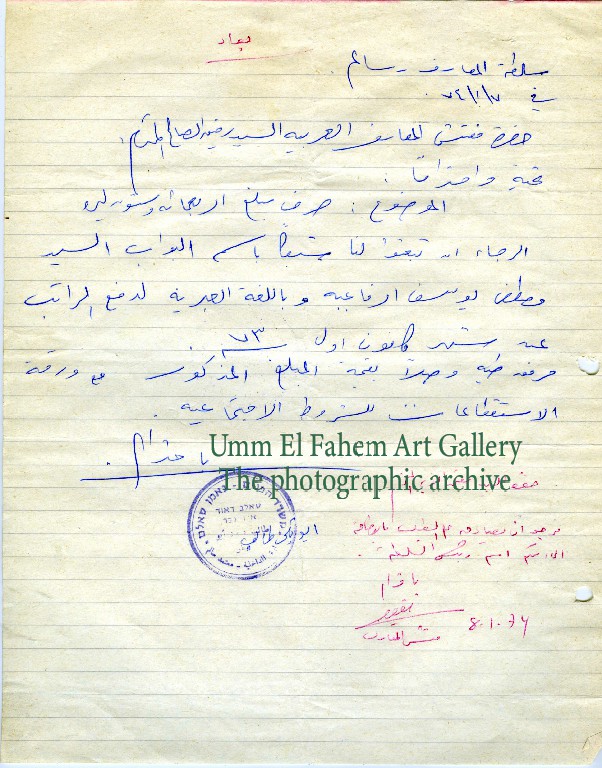
Letter from Mokhtar Salem to the Inspector of Education, Rafiq Saleh, regarding the payment of fees to a maintenance man, 1974. Source: Talib Daoud Abu Bakr.
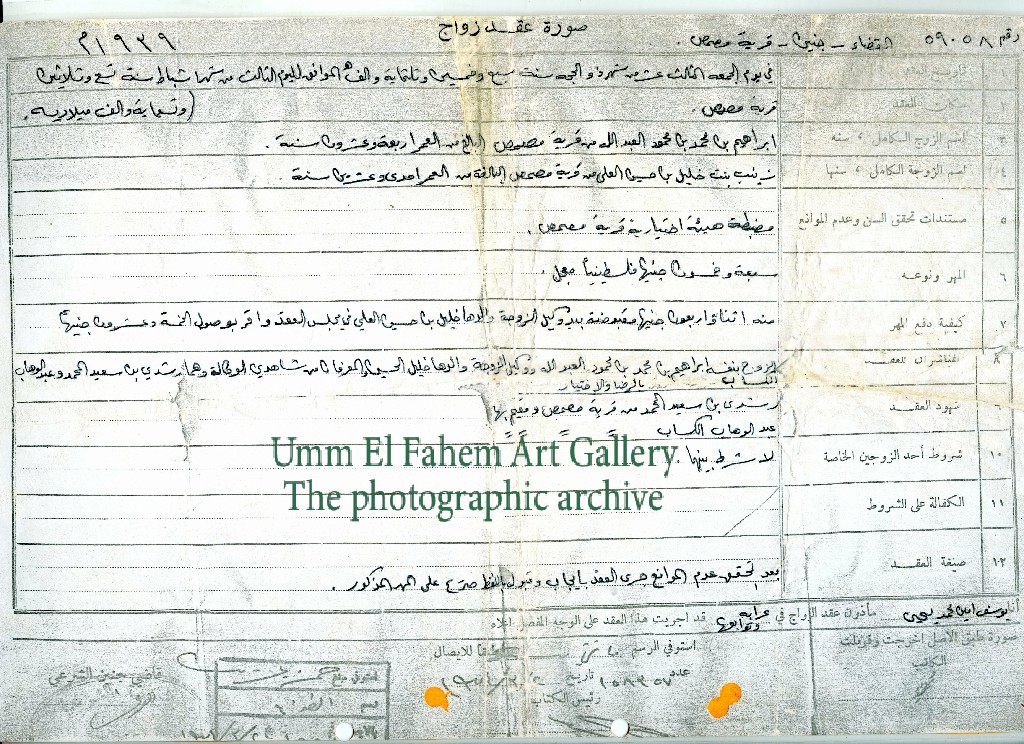
Marriage contract for Mr. Ibrahim Muhammad Mahmoud al-Abd from Mosmus to Zainab al-Khalil, 1939. Source: unknown.
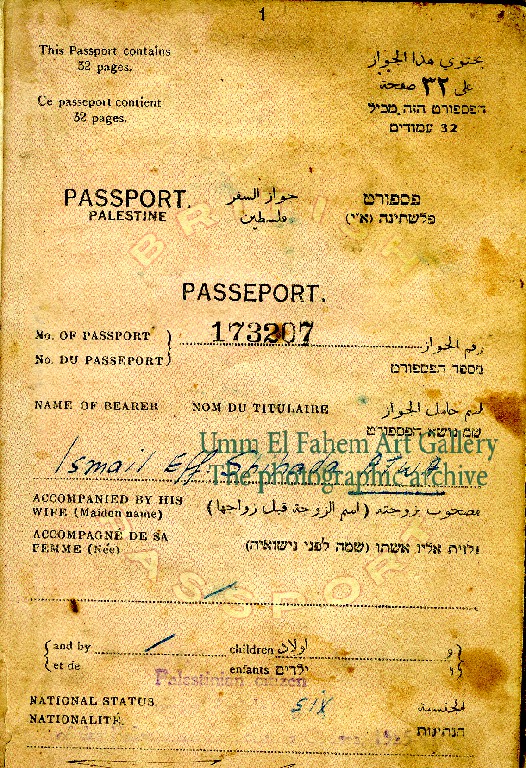
Palestinian passport for Mr. Ismail Shahada Atawa, born in Bisan, 1915. Source: unknown.
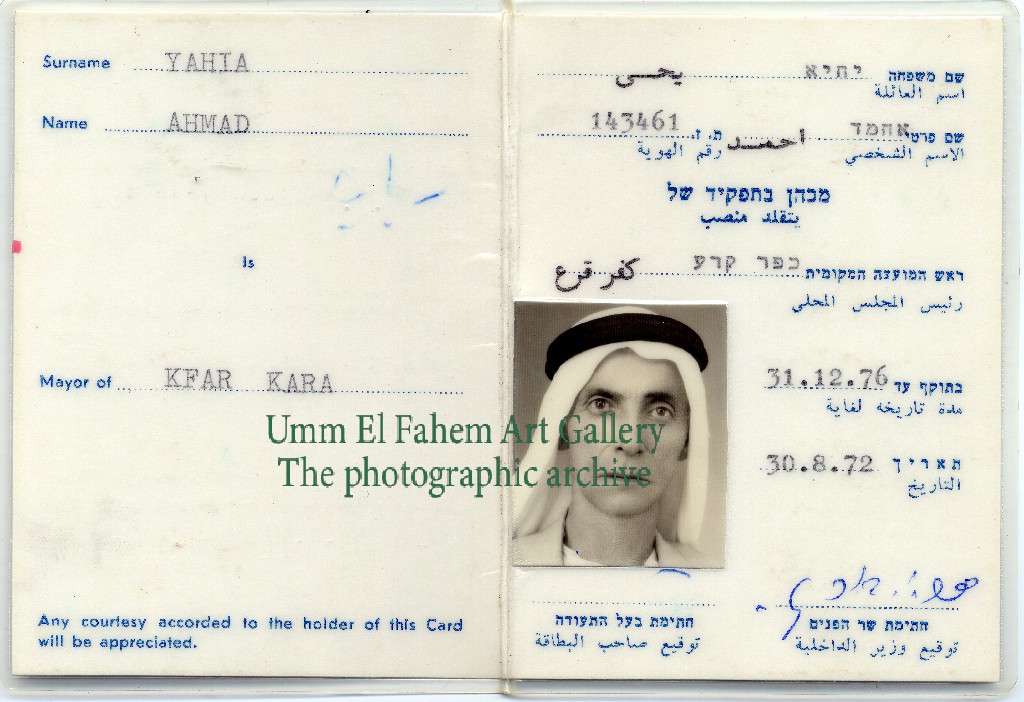
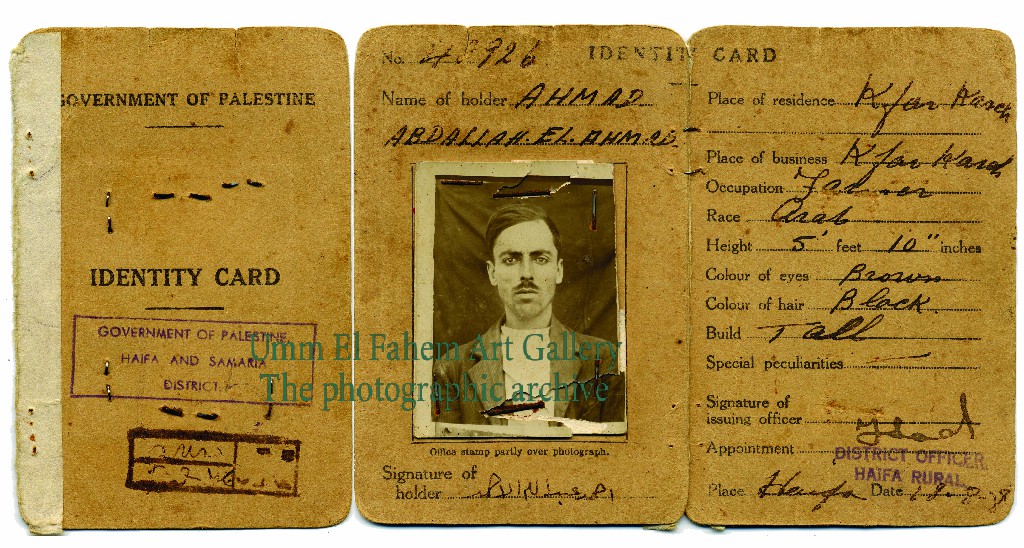
Identity card of the head of the Kfar Kara local council, Ahmed Abdullah Yahya, 1970s. Source: Al-Bir Association.
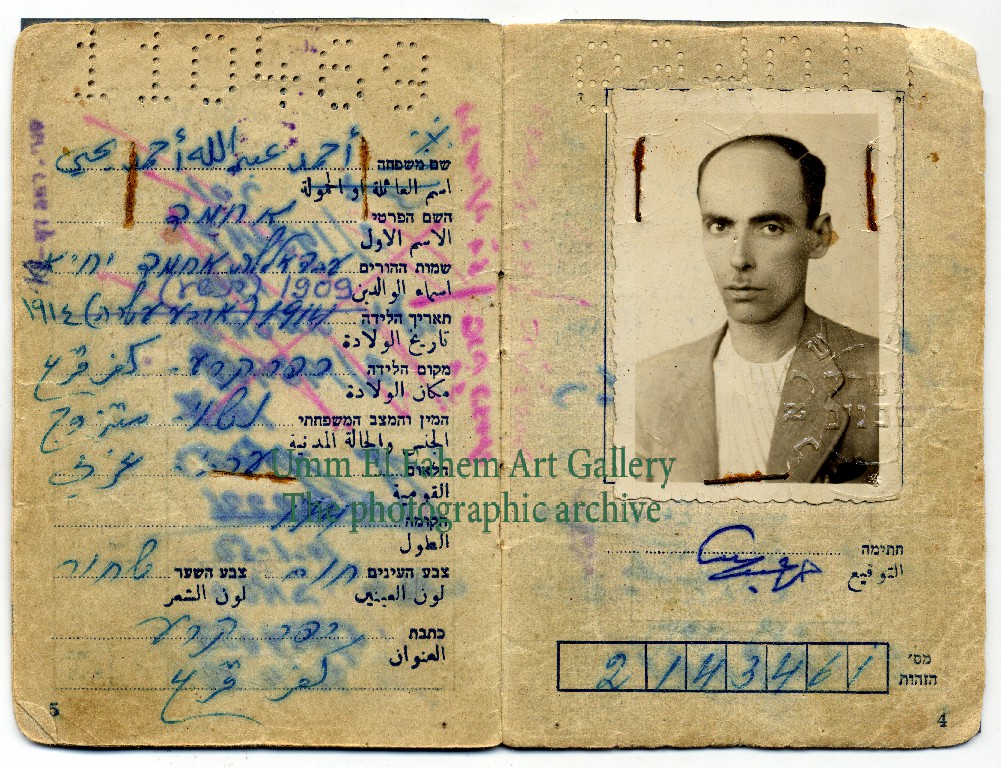
Identity card of Mr. Ahmed Abdullah Yahya (Kfar Qara), 1950s, source: Al-Bir.
Arbitration document from the Jenin district commissioner's office, regarding the Badir family pardon, 1949. Source: Mr. Aref Rushdi.
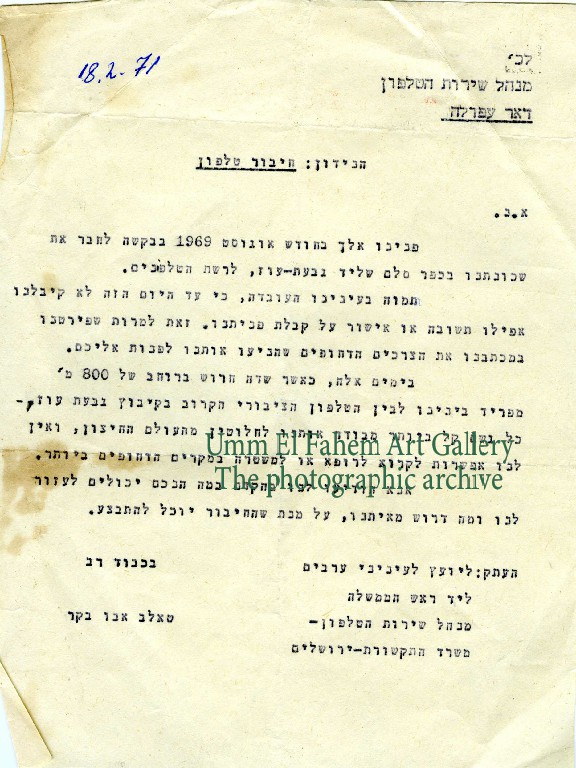
Document for connecting the village of Salem to a telephone line, 1971. Source: Talib Daoud Abu Bakr.
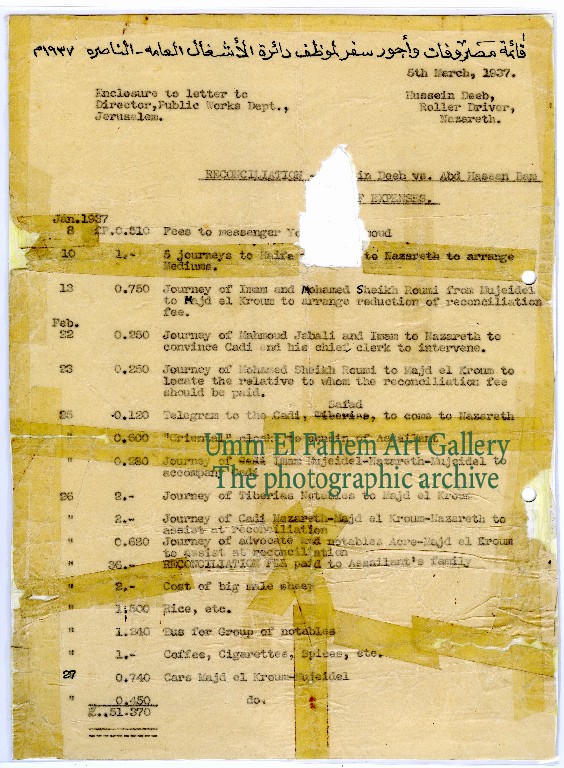
A copy of a document listing travel expenses and wages for an employee of the Public Works Division, Nazareth, 1937. Source: Beit Talat Mahajana - Mosmus.
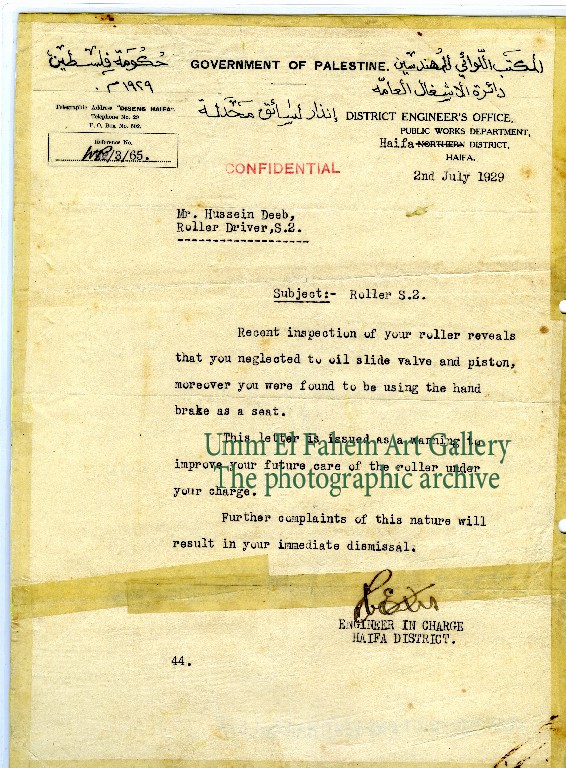
Warning document for the driver of the press tool who did not fulfill his duty, 1929. Source: Beit Talat Mahajana - Mosmus.
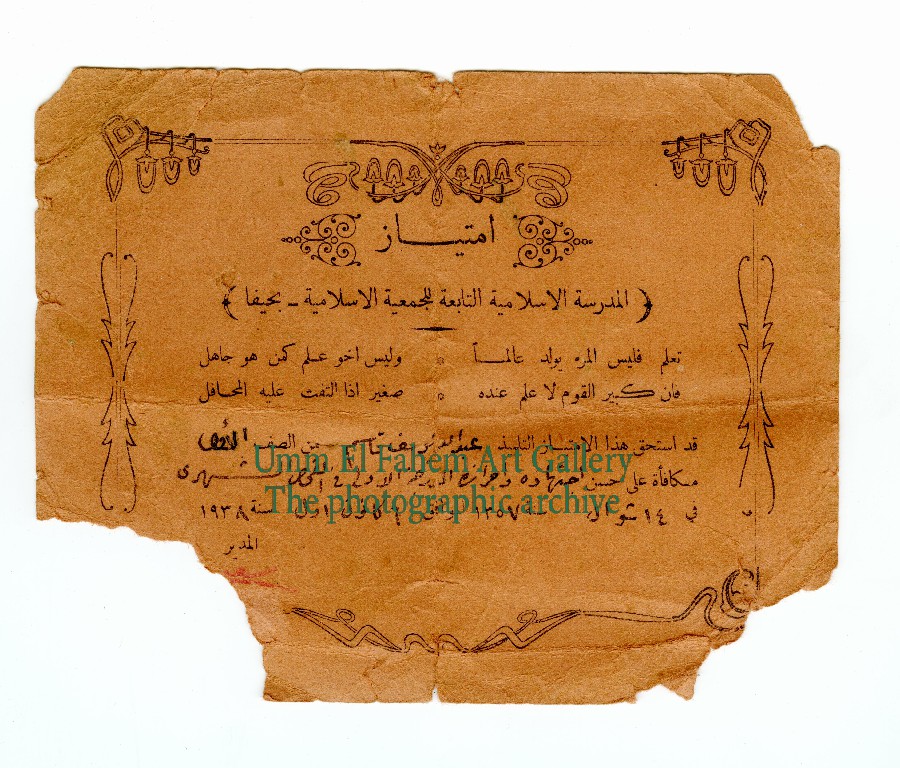
1st grade honors certificate for Mr. Abdullah Yusef Qassem Abu Hassan, Haifa, 1938. Source: Haj Abdullah Abu Hassan.
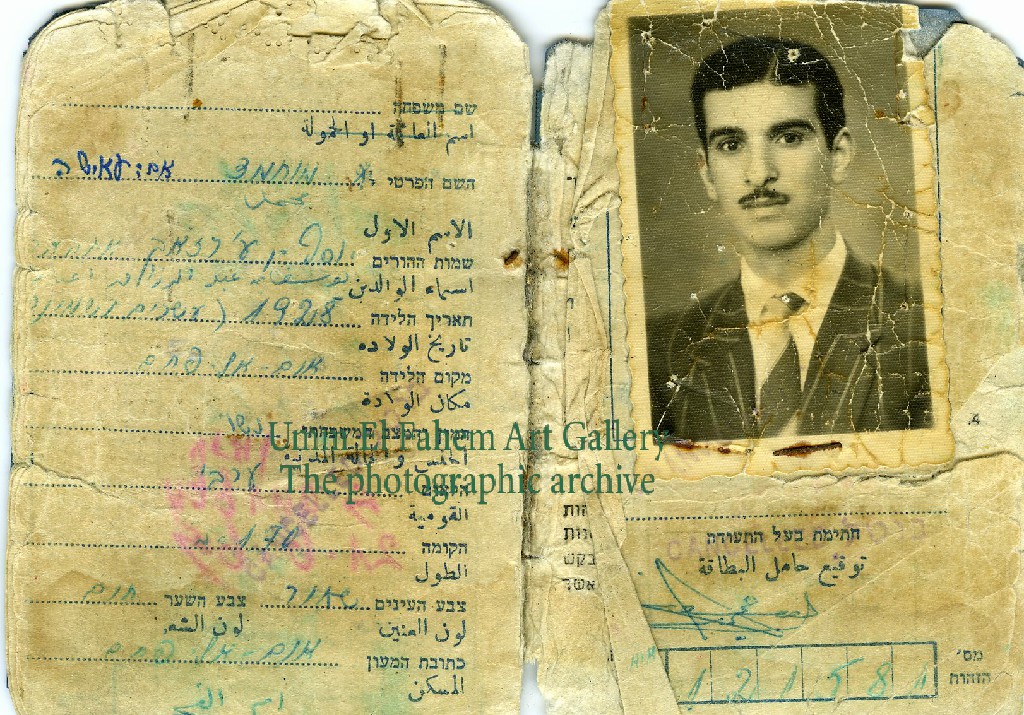
Photocopy of the identity card of Muhammad Yusef Abdel-Razzaq, age 50. Source: Beit al-Hajj Muhammad Yusef Abdel-Razzaq.
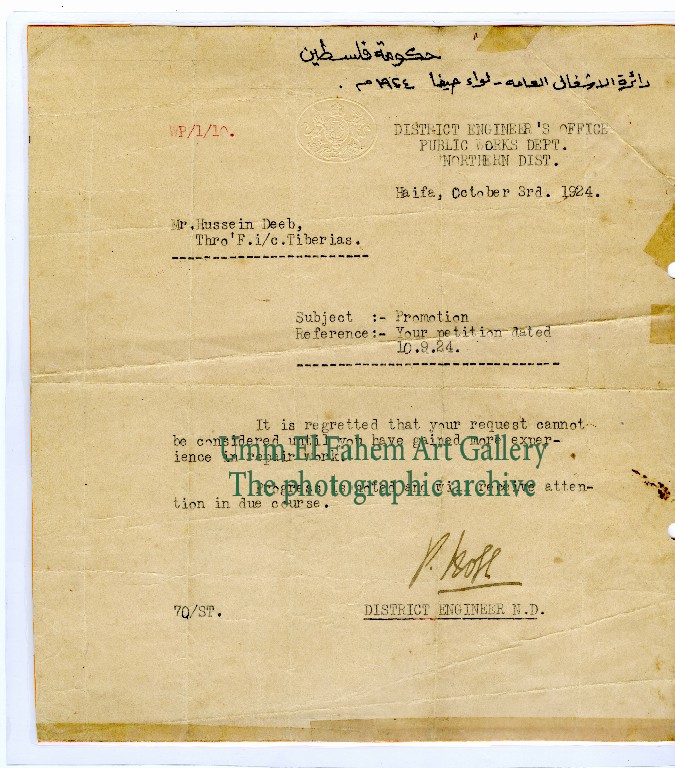
Warning document for negligence in working with a machine, 1924. Source: Beit Talat Mahajana - Mosmus.
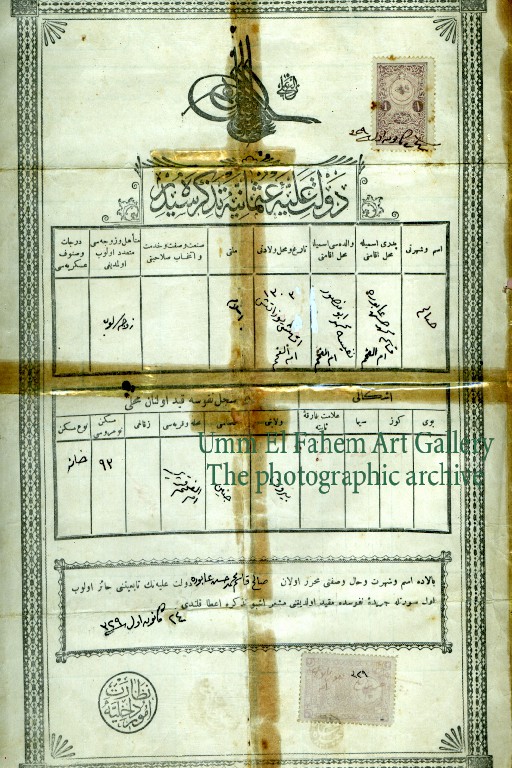
Birth certificate from the period of the Ottoman Empire for the newborn Saleh Qassem Muhammad Abura - Umm el Fahem, 1908. Source: unknown.
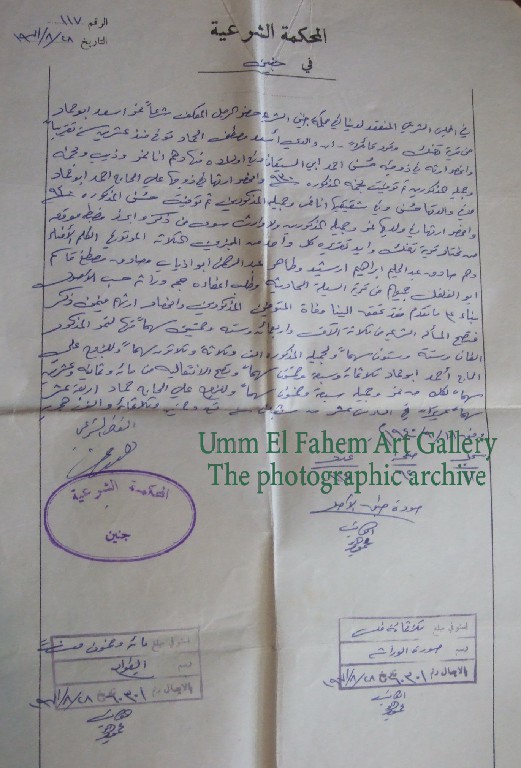
Photograph of landowners from the Sharia Court in Jenin, 1971. Source: from the house of Haj Ahmed Ali Abu Bakr Salem.
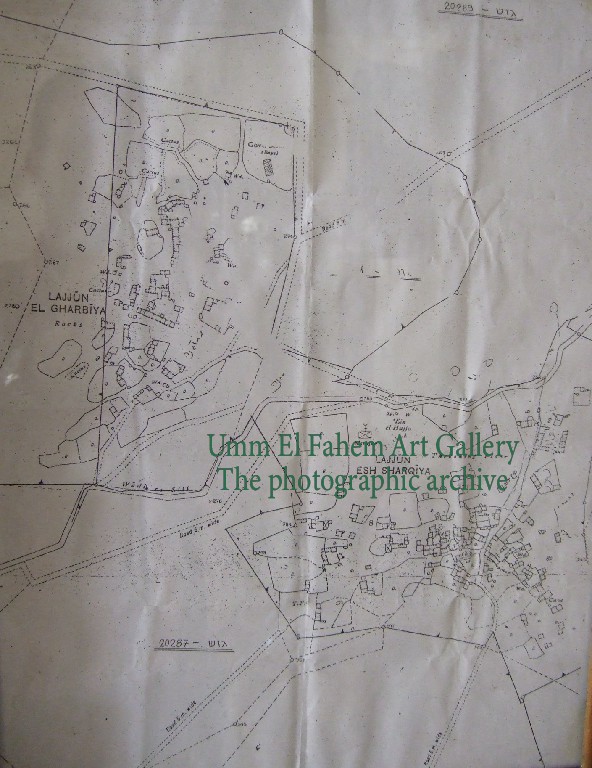
Map of Kfar Lajun, 1947, source: Haj Muhammad Mustafa - Abu Omar.
Transit visa from the British Mandate period, by Mr. Ahmed Abdullah Yahya (Kfar Kara), 1930s. Source: Al-Bir Association.

Photos

Elders of the Wadi

Hamzah Husayn Mustafa, Mahamid (1932), Umm el-Fahem, 2011, photo by Ammar Younes
Basmah Qahavesh Eghbariya (1931), Umm el-Fahem, 2011, photo by Ammar Younes
Mustafa Muhammad Mahmoud Abu Al-Khara Mahamid (1928), Umm el-Fahem, 2011, photo by Ammar Younes
Jamilah Nubani Mahamid (1929-2013), Umm el-Fahem, 2011, photo by Ammar Younes
Zuhriyya Muhammad Dawoud younis (1927), Ara, 2011 photo by Ammar Younes
Kasem Said shiekh zaydalani (1937), Umm el-Fahem, 2011, photo by Ammar Younes
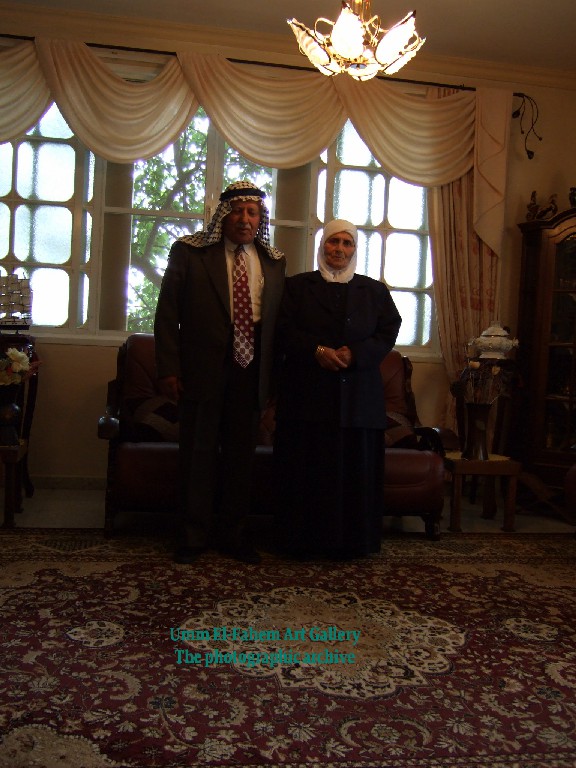
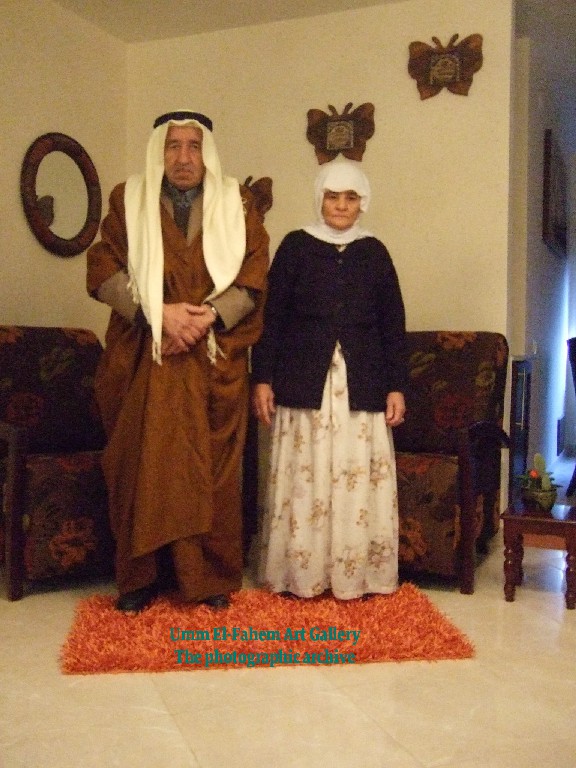
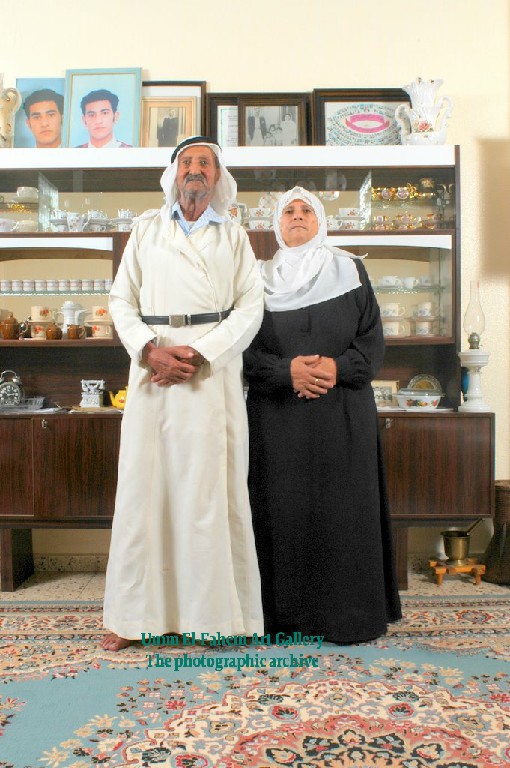
Suleiman Ahmed Kabaha and his wife, Umm al-Kataf, photo: Mahmoud Ighbariya, 2008.
Haj Farid Hasan Igbaria Abu Shukri, Mosmus, photo: Mahmoud Igbaria, 2008.
Yosef Saleh Abu Lil in his home, Kfar Kara, photo: Mahmoud Igbaria, 2007.
Ahmed Abd al-Qadir Sharbaji of Khajna, Umm el-Fahem, photo: Najat Tamish, 2007.
Haj Mustafa Yosef Tamish, Umm el-Fahem, photo: Pardos Mahamid, 2007.
Muhammad Hajj Younes ‘Abd al-Ghani Mahajnah (1918), Umm el-Fahem, 2007 ,photo by Shay Aloni
Najib Sadeq Jabarin (1926), Umm el-Fahem, 2007, photo by Shay Aloni
Ahmad Muhammad Sadeq Jabarin and his Wife Nawal Mahmoud Jabarin, Umm el-Fahem, 2007 ,photo by Shay Aloni
Sheikh Tawfiq ‘Asaliyya Jabarin (1925), Umm el-Fahem, 2007 ,photo by Shay Aloni
Halimah Muhammad Sulayman Zayd (1928), Ara, 2011, photo by Ammar Younes
Ahmad Mustafa Musa Aghbarieh Abu Salim, Umm el-Fahem, photograph by Ammar Younis, 2012
Muhammad Hasan Tamish Mahajnah (1932), Umm el-Fahem, 2011, photo by Ammar Younes
Muhammad Munib Sheikh Zayd Alan (1936), Umm el-Fahem, 2011, photo by Ammar Younes
Munifah Muhammad Younes (1923), Ara, 2011, photo by Ammar Younes
Sumayyah Muhammad Naser Zayd Al-Glani (1930), Ara, 2011, photo by Ammar Younes
Mufid Saleh ‘Abd al-Najib Eghbariyya (1936), Musmus, 2007 ,photo by Shay Aloni
Haj Kamal Yosef of Khajna with his wife Muawiya, photo: Mahmoud Ighbariya, 2008.
Al-Hajja Fatima Muhammad Al-Hajj Musa, Umm el-Fahem, Photo: Sohrab Aghbariya, 2007.
Salman Jaber Masalha - former head of the Kfar Kara Council, Kfar Kara, photo: Mahmoud Igbaria, 2007.
Mr. Khalil Yusef Abu Zina in his home, Umm al-Fahm, photo: Yasmin Jabarin, 2007.
‘Aref Rushdi (1926) & his wife Saniyya, Umm el-Fahem, 2007 ,photo by Shay Aloni
Muhammad Khalil Jabarin (1931), & his wife Rasmiyya Yousef Jabarin, Umm el-Fahem, 2007 ,photo by Shay Aloni
Ramzy Husayn Hajj Dawoud Mahamid (1924), Umm el-Fahem, 2007 ,photo by Shay Aloni
Yousef Abu Husayn (1933) and his wife Tawaddud (1943), Umm el-Fahem, 2007, photo by Shay Aloni
AmnahTawliq Jabarin, (1925), Umm el-Fahem, 2011, photo by Ammar Younes
Khadijah Hasan Mahamid, (1913), Umm el-Fahem, 2011, photo by Ammar Younes
Arefah Nimer Mustafa Saran (1935), Umm el-Fahem, 2011, photo by Ammar Younes
Muhammad Alikhalid (Abu Khalid), (1936), Umm el-Fahem, 2011, photo by Ammar Younes
Munifah Muhammad Younes (1923), Ara, 2011, photo by Ammar Younes
Hanifah Mousa Di'ayyif (1932), Ara ,2011, photo by Ammar Younes
From right: Al-Hajj Fawzi Khaled Mahamid – Al-Hajj Tawfiq Muhammad Abd al-Fattah Mahajna – Al-Hajj Najib Youssef Muhammad Mahamid – Al-Hajj Kamel Youssef Muhammad Mahamid – Mr. Tal’at Saleh Mahajna. Musmus, Mu‘awiya. Photograph: Mahmoud Ighbarieh, 2008.
Hajj Muhammad Said Abu Alouh (Mukhtar Muawiyah) and his wife Muawiyah, Photo: Mahmoud Ighbariya, 2008.
Hajj Suleiman Ahmed Kabah and his wife, Umm al-Kataf, photo: Mahmoud Igbaria, 2008.
Hanifah Mousa Di'ayyif (1932), Ara ,2011, photo by Ammar Younes
Muhammad Fantz of Khajna, Umm el-Fahem, photo: Najat Tamish, 2007.
Muhammad Husayn ‘Eiq (1931) & his wife, Umm el-Fahem, 2007 ,photo by Shay Aloni
Khalil Ibrahim Mahajnah (1922) & his wife Yusra Muahammad ‘Abd (1943), Umm el-Fahem, 2007 ,photo by Shay Aloni

Before 1948

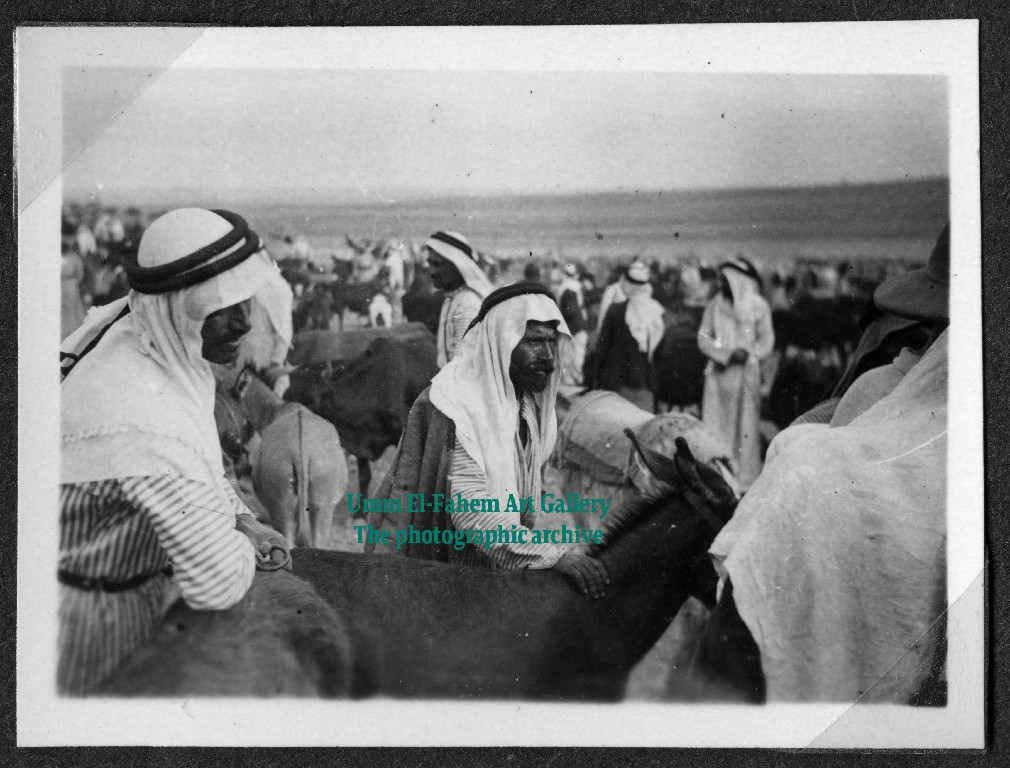
Villagers from Wadi Ara at the animal market in Haifa, source: Kibbutz Hazore'a archive.
Excavation workers on a lunch break at the excavation camp, source: American Delegation of the University of Chicago.
Children from the village of Umm al-Dafouf, source: Kibbutz Dalia archive.
Picking pomegranates in the Umm al-Dafuf orchard, source: Kibbutz Dalia archive.
The process of demolishing the Khan in Umm al-Dafuf before the eyes of its residents, source: Kibbutz Dalia archive.
One of the workers brought from Egypt to participate in the excavations, source: the American Delegation of the University of Chicago.
Villagers from Wadi Ara at the animal market in Haifa, source: Kibbutz Hazore'a archive.
A room in Khan Umm al-Dafuf, source: Kibbutz Dalia archive.
A delegation from Zikrhon Ya'akov visits Kfar Sabrin. Hosted by Jabri Amin Al-Haj. Source: Archives of the Government Press Office.
Women from the village of Lejon participate in excavation work, source: American Delegation of the University of Chicago.
Excavation workers uncover the deep water well, source: University of Chicago American Deligation.
Mother and son of Umm al-Dafouf, source: Kibbutz Dalia archive.
Cafe in El-Lejon, 1925-1939, Source: American Delegation of the University of Chicago.
Thresher in Kfar Kiri (in the background Kibbutz Hazore'a), source: Kibbutz Hazore'a archive.
The village of Dalit El Ruha, source: Kibbutz Dalia archive.
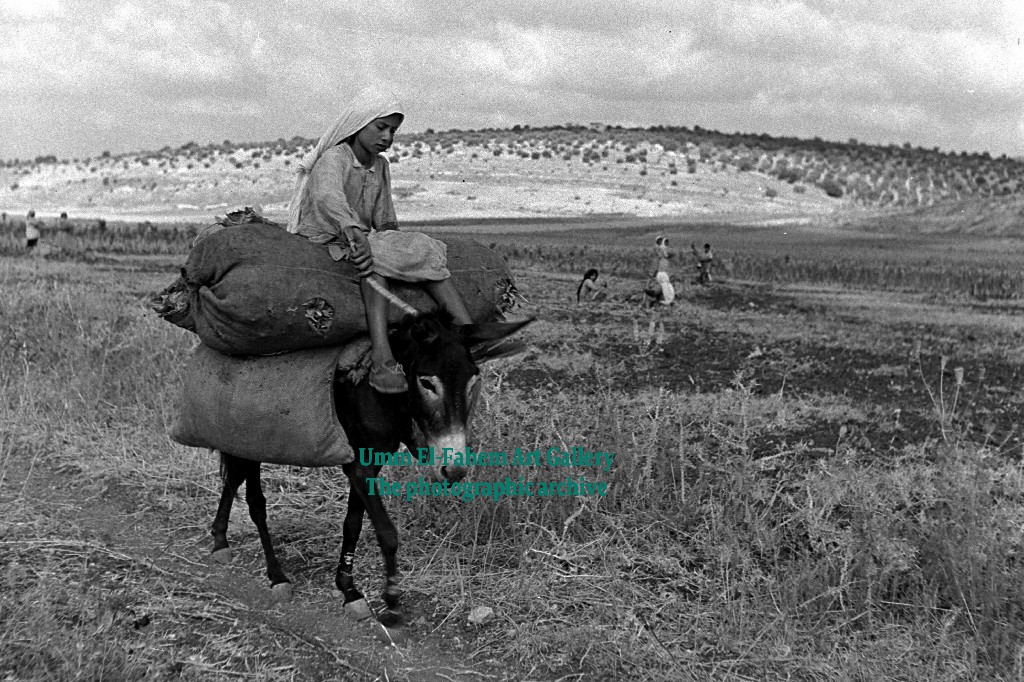
A girl from Kfar Ara returns to her home with bags of tobacco that she picked with her family from the field, source: Government Press Office. Photo: David Eldan.
The remains of the Khan in Umm al-Dafuf after its demolition, source: Kibbutz Dalia archive.
A caravan of camels crossing the Mosmus village, Wadi Aara. Source: The American Delegation of the University of Chicago.
Dbekah dance with the argul player at a party in the village of Lajeune, source: American Delegation of the University of Chicago.
Fayed al-Hasan Tamish and his daughter at the entrance to the Diwan al-Lajon, 1925-1935, Source: The American Delegation of the University of Chicago.

After 1948

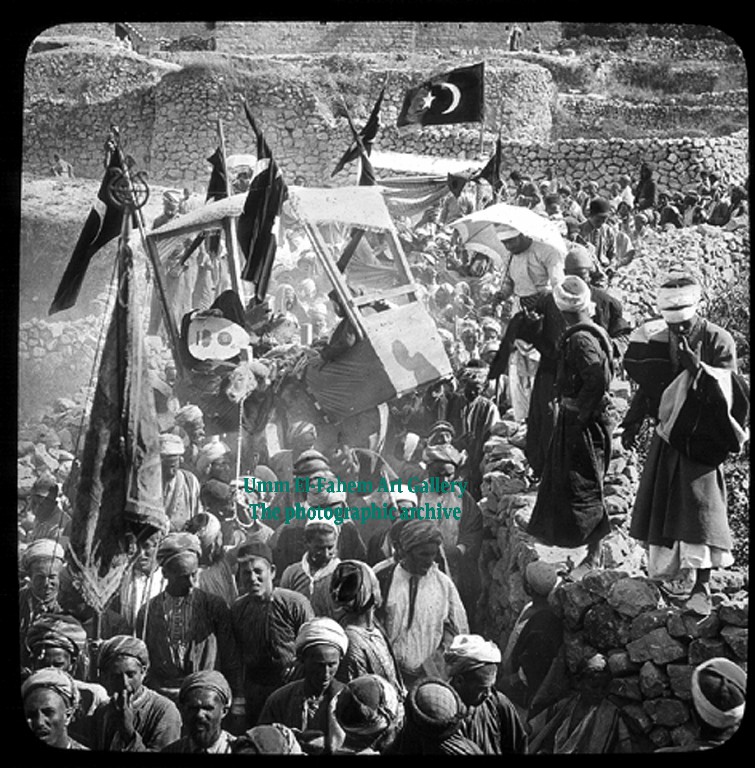
Celebrations of the Prophet Muhammad's birth in Lajoun. It should be noted that the residents were still loyal to the Ottoman Empire, 1925-1939. Source: The American Delegation of the University of Chicago.
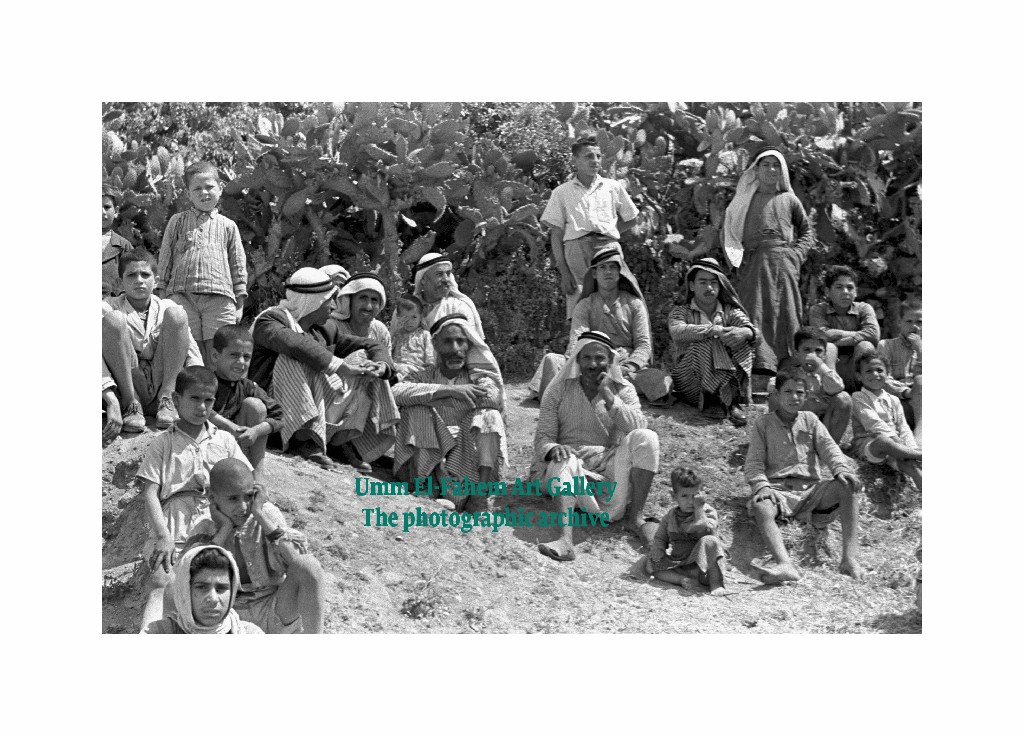
Israeli officers enter Umm el-Fahem. Source: State Archives.
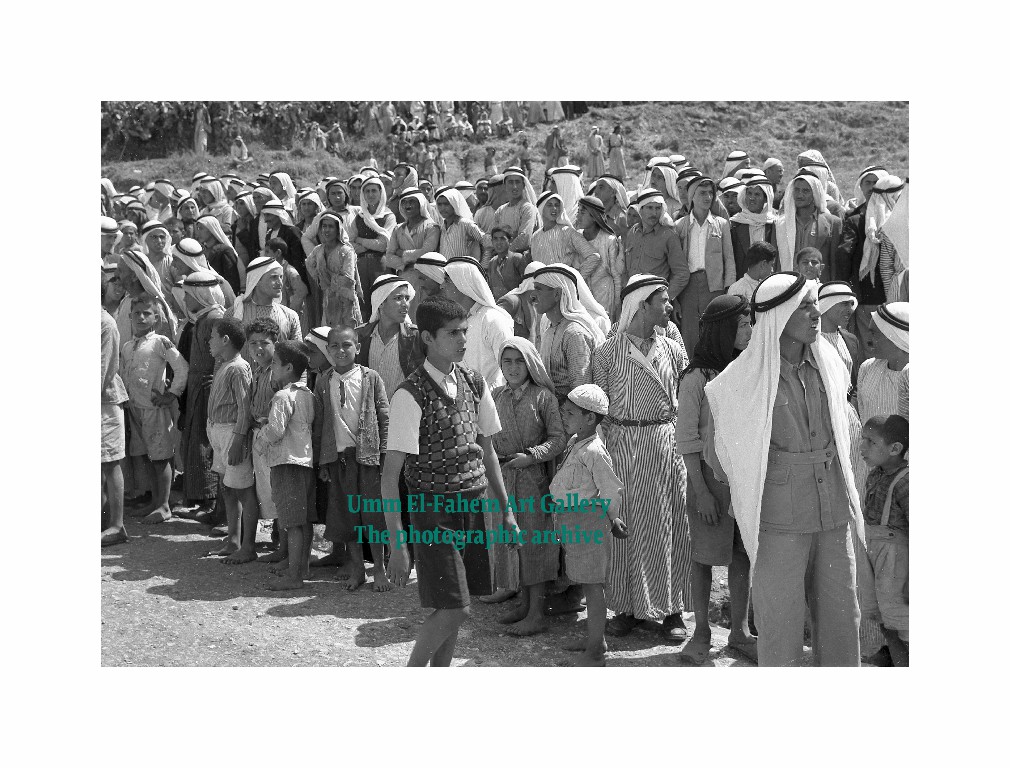
Residents of Umm el-Fahem on the day of annexation to Israel. Source: State Archives.
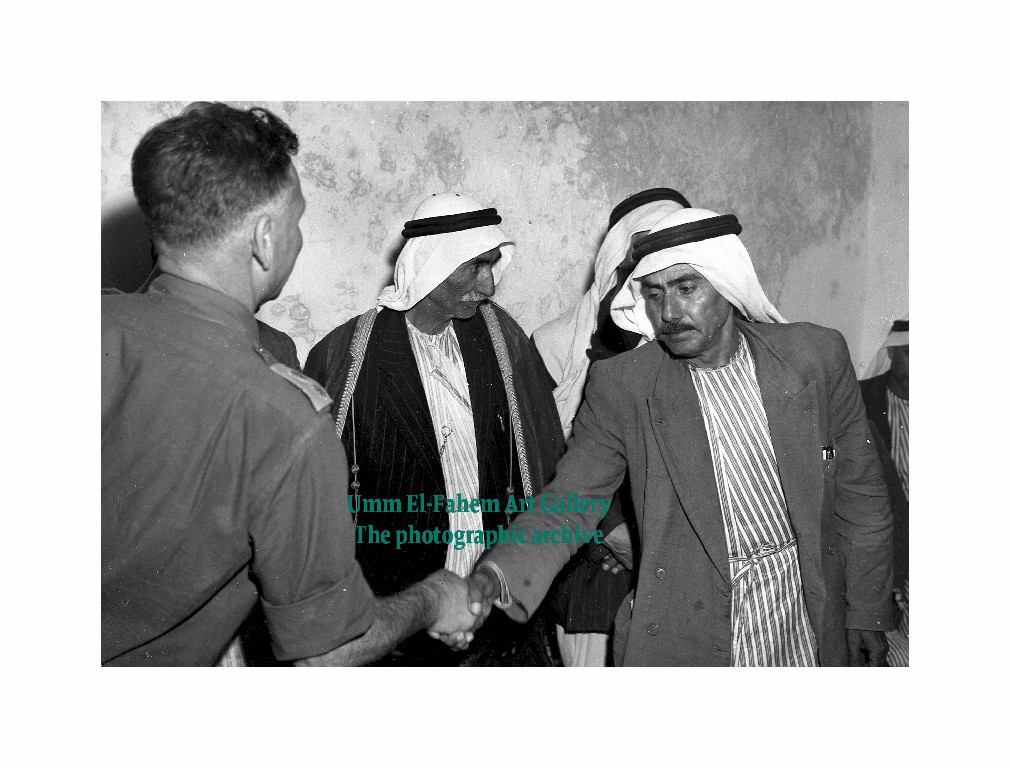
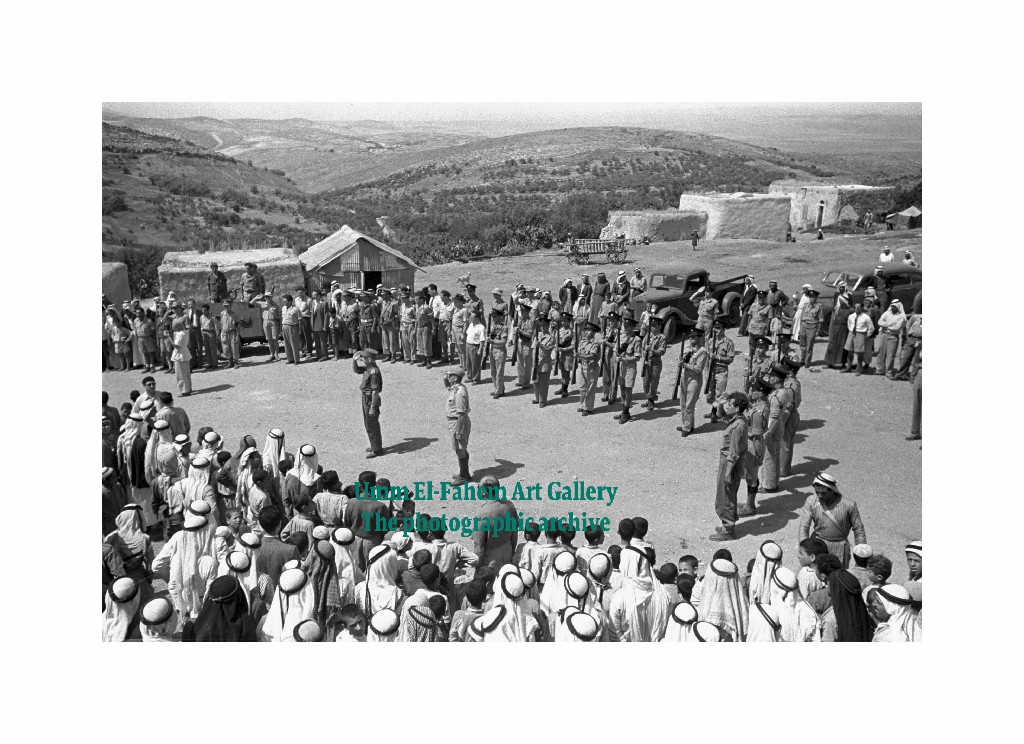
The military governor's officer meets the mukhtars of Umm el-Fahem. Source: State Archives.
The first Israeli military parade in Umm el-Fahem. Source: Government Press Office.
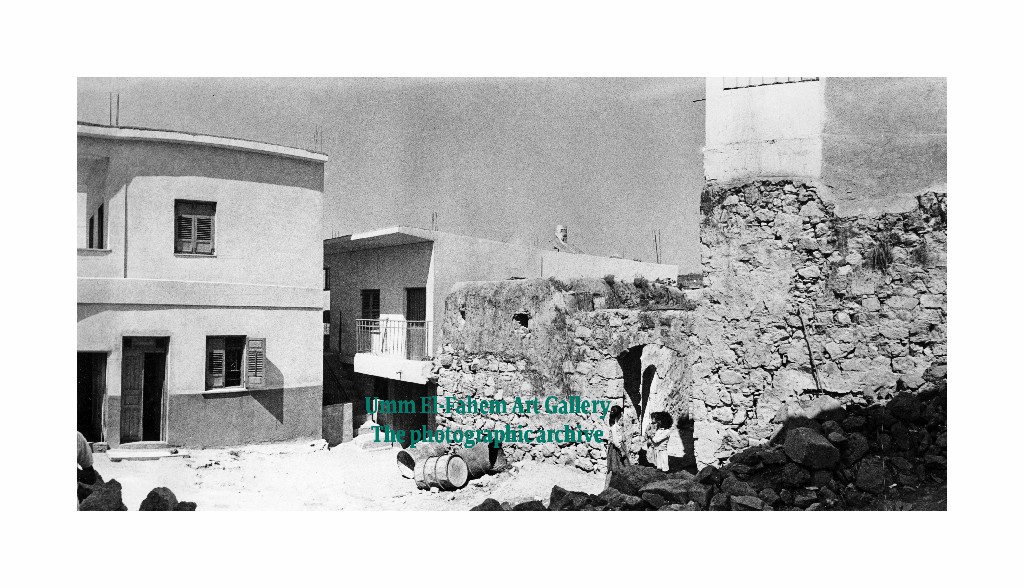
Umm el-Fahem: the new meets the old. Source: Haaretz newspaper archives. Photo: David Ulmer.
The harvest in Wadi Ara. Source: family photo collection. Photography: Maxim Solomon.
The act of harvesting with the sickle. Source: family photo collection. Photography: Maxim Solomon.
Mosmus Source: Government Press Office, Photo: Fritz Cohen.
Photo of a class from Kfar Qara in the 1960s, Alrashid Studio (Tul Kerem), photos of the Albir Association.
Children from Umm el-Fahem on the day of the annexation. Source: State Archives.
Residents of Umm el-Fahem on the day of annexation to Israel. Source: State Archives.
An Israeli soldier reads posters on behalf of the military governor. Source: Government Press Office.
A meeting between military government officers and Umm el-Fahem leaders. Source: Government Press Office.
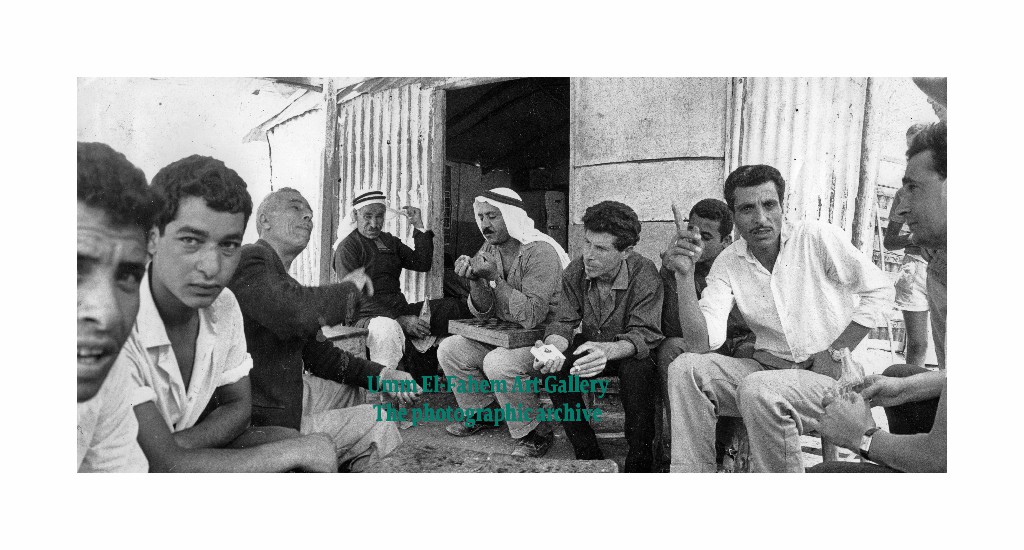
A meeting of generations at the Umm el-Fahem cafe. Source: Haaretz newspaper archives. Photo: David Ulmer.
The harvest in Wadi Ara. Source: family photo collection. Photography: Maxim Solomon.
Al-Shikhun neighborhood in Umm el-Fahem. Source: The special collection. Photography: Amiram Arab.
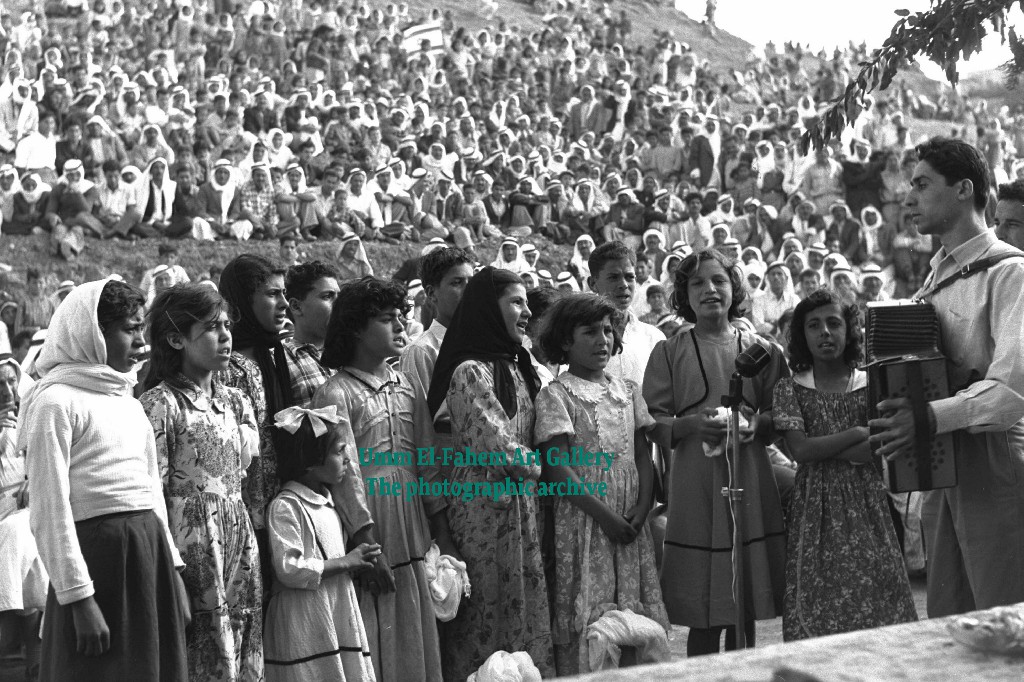
girls' choir with an accordion player in the celebrations of ten years since the founding of the State of Israel. Source: Government Press Office, Photo: Moshe Friedman.
teacher Abd al-Rauf al-Karbi and his students (Kfar Qara). Source and photo: Al-Bir association.
A student choir in Kfar Kara is preparing for the Israeli Independence Day ceremonies. Source and photo: Al-Bir association.
Residents of Umm el-Fahem on the day of annexation to Israel. Source: State Archives.
A traditional country house. Source: State Archives.
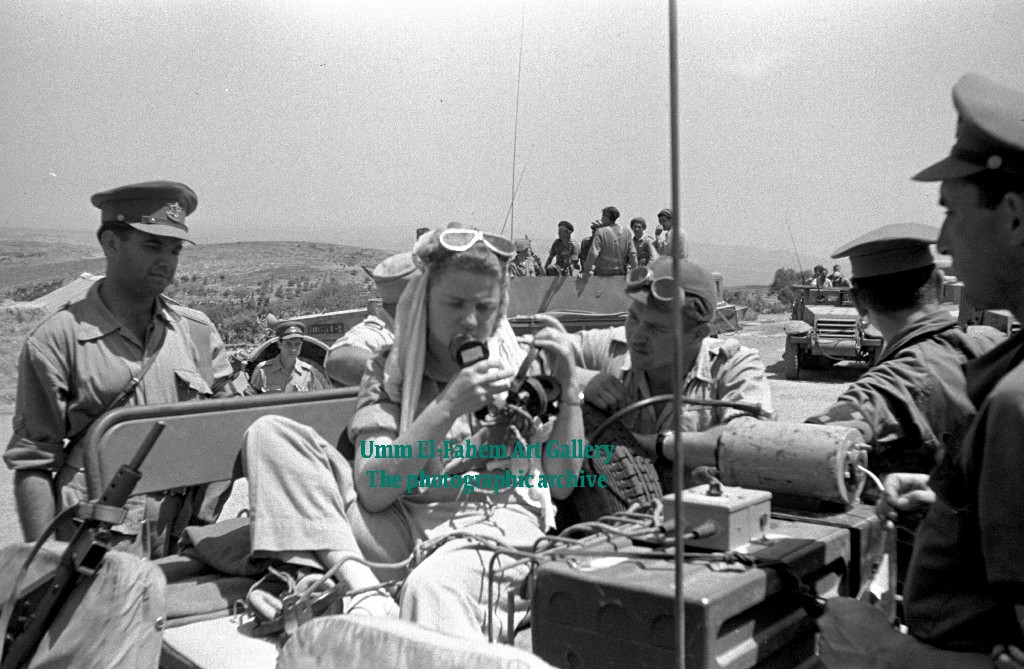
Weapons collection point from the people of Umm el-Fahem. Sorce: the government press office.
Harvest loading process in Wadi Ara, 1953, family photo collection, Maxim Solomon.
Muhammad Ali Sabah's textile shop. Source: Haaretz newspaper archives. Photo: David Ulmer.
An Israeli military vehicle on the green line south of Umm el-Fahem. Source: Government Press Office. Photo: Moshe Friedman.
In the line for of the mail reception, 1965, Ar'ara, Mahmoud Rashid Younes.
First carpentry class in Kfar Kara. Source and photo: Al-Bir association.
The groom's procession (Kfar Qara), source and photo: Al-Bir association.

Videos

Oral Testimonies

Haja Khadija Hassan Mahameed, lived during the English Mandate and lived to be more than 105 years old. Interview and editing: Umm el-Fahem Wadi Ara archive.

Excerpt from an interview with Haj Lutfi al-Awad Mahamid, a resident of Umm el-Fahem. Haj Lutfi Awad is one of the founders of the Communist Party in Umm el-Fahem and was politically active. He lived during the British Mandate and experienced bitter experiences under its occupation. Interview and editing: Umm el-Fahem Wadi Ara archive.

An interview with Sheikh Tawfiq Asliya, former head of the Sharia Court of Appeals. Interview: Mr. Mahmoud Ahmed Agbariya (Abu Anas). Editing: Umm el-Fahem Wadi Ara Archives, 2017.

A collection of excerpts from interviews with several elders of Wadi Ara. The interviewees talked about various topics, including life during the mandate period and the period of military rule, including the state of education, the economic situation, work, tradition, and political situation that prevailed in the various periods. Interview and editing: Umm el-Fahem Wadi Ara archive, 2017.

Historical Documentation

A historical film in black and white about the Battle of Megiddo 1918, held in the area of Marj Ben Ammar, between the British forces led by General Edmund Allenby, and the Ottoman forces. The battle ended in a decisive victory for the British.

Selected clips of football in Umm el-Fahem in the 90s.

A short video from the visit of former Knesset member Meir Kahana, leader of the Kach movement, to Umm el-Fahem in 1984. The visit led to violent clashes between the demonstrators and the Israeli police. Production: Umm el-Fahem Wadi Ara archive.

A wedding from the 1950s by Aref Rushdi Agbaria. The video shows the old customs and traditions of the wedding, alongside color photographs of the old houses in Umm el-Fahem.

Video clips of the snow atmosphere in the city of Umm el-Fahem in 1992. Photo: Enan Studio. Editing: Umm el-Fahem Wadi Ara archive.

The announcement of the settlement of Umm el-Fahem as a city on Israeli television, 1984. The report is presented by the announcer, Haim Yavin. In addition, well-known personalities of Umm el-Fahem are seen in the video, including its first mayor, the late Mr. Hashem Mahmid.

The film presents the city of Umm el-Fahem from the Ottoman period to the present day. Production: Umm el-Fahem Wadi Ara Archive.

A short video from the period of the British Mandate and the Arab Revolt, which took place in 1936. The video shows life in a group of Arab villages and towns.

Documentary Films

A video presenting the success stories of some of the various institutions in Umm el-Fahem, including the art gallery.

A short segment documenting old women from the Wadi Ara area, from the full length film “Brides in White”, by the photographer Amr Younes Ma’arara. The film was presented at the photographer’s art exhibition, which was exhibited at the Umm el-Fahem Art Gallery in 2017.

The internatio artist, Yoko Ono, participates in the opening of the “Open Window” exhibition at the Umm el-Fahem Art Gallery, 1999.