- Raya Bar-Adon
An Intimate dialogue in Black and White
Since the outset of her artistic career, Raya Bar-Adon has been creating woodcuts and linoleum prints along with a ramified oeuvre of sculpture and painting. From the 1970s to the mid-1980s, she produced wall reliefs and monumental public works. She illustrated books and even engaged in art and drama therapy for many years.
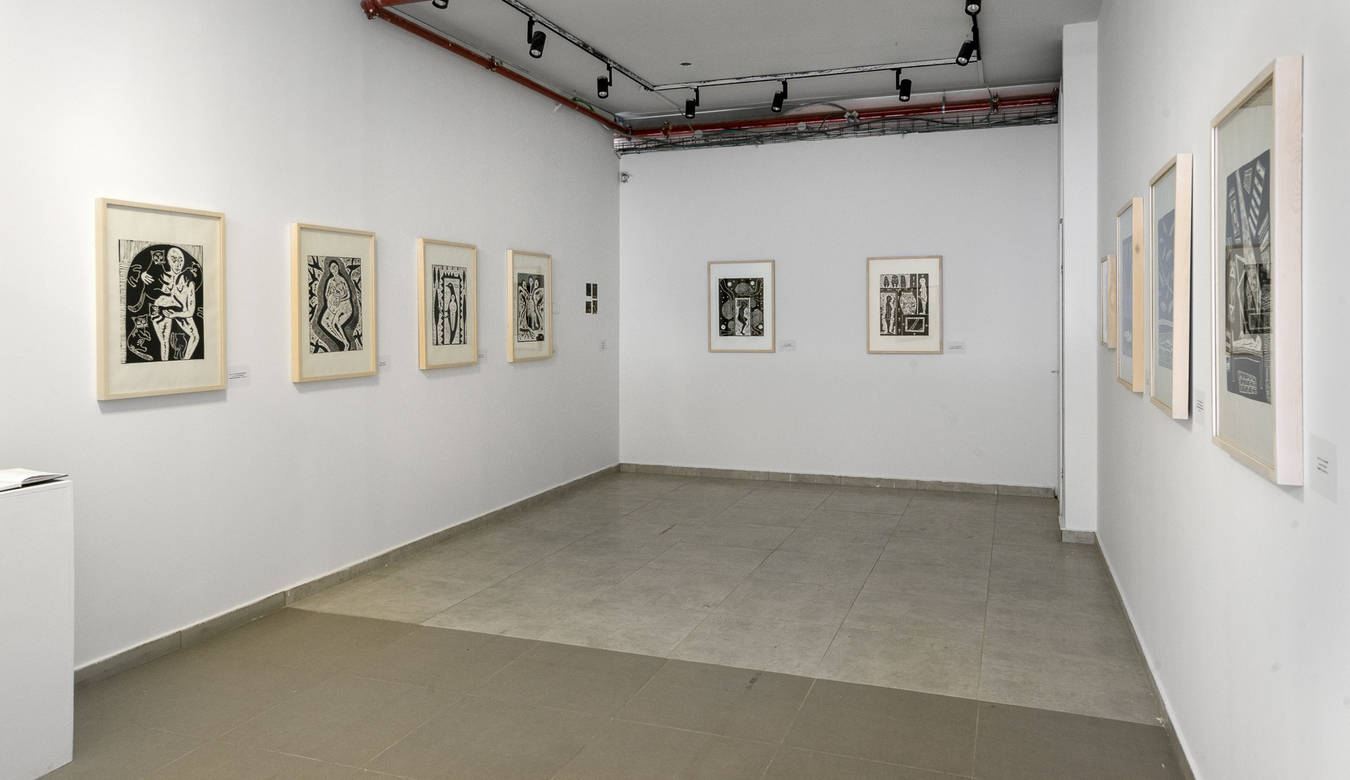
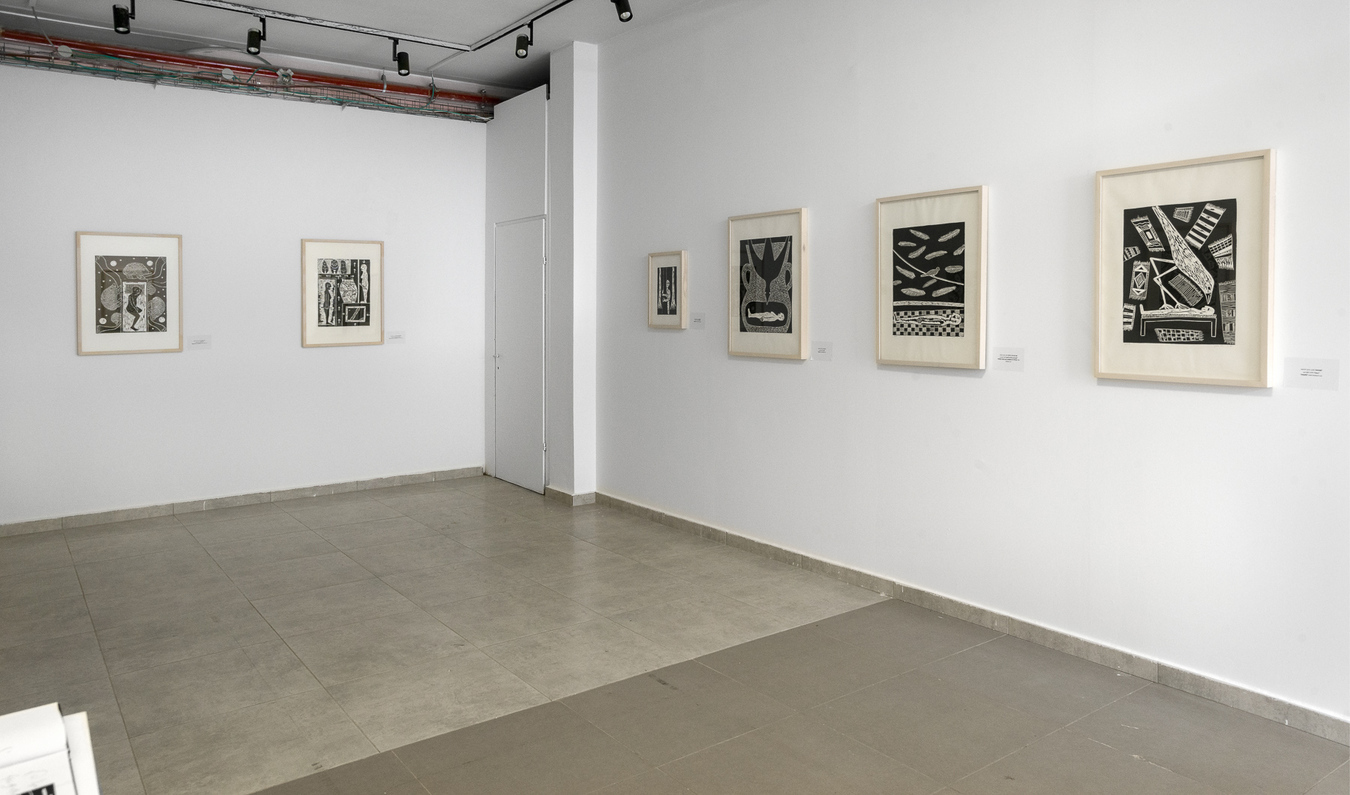
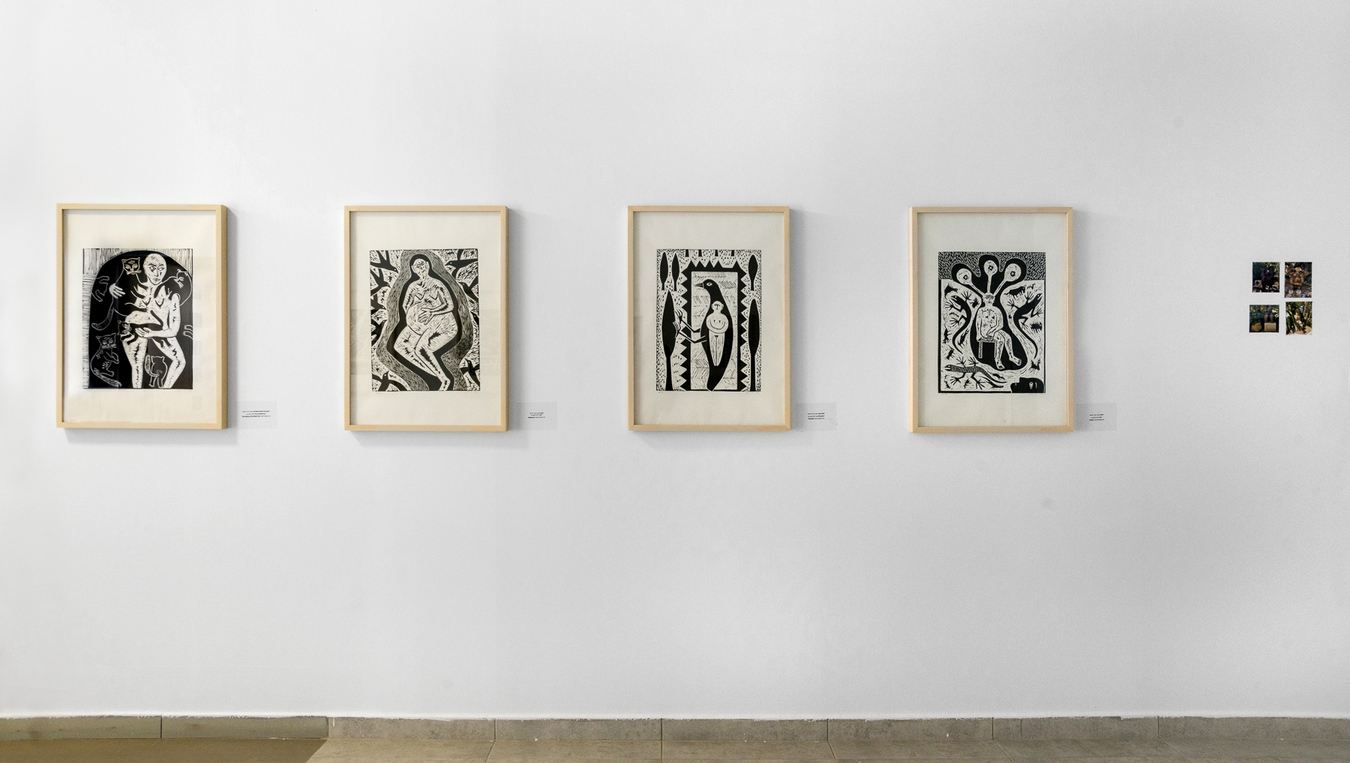
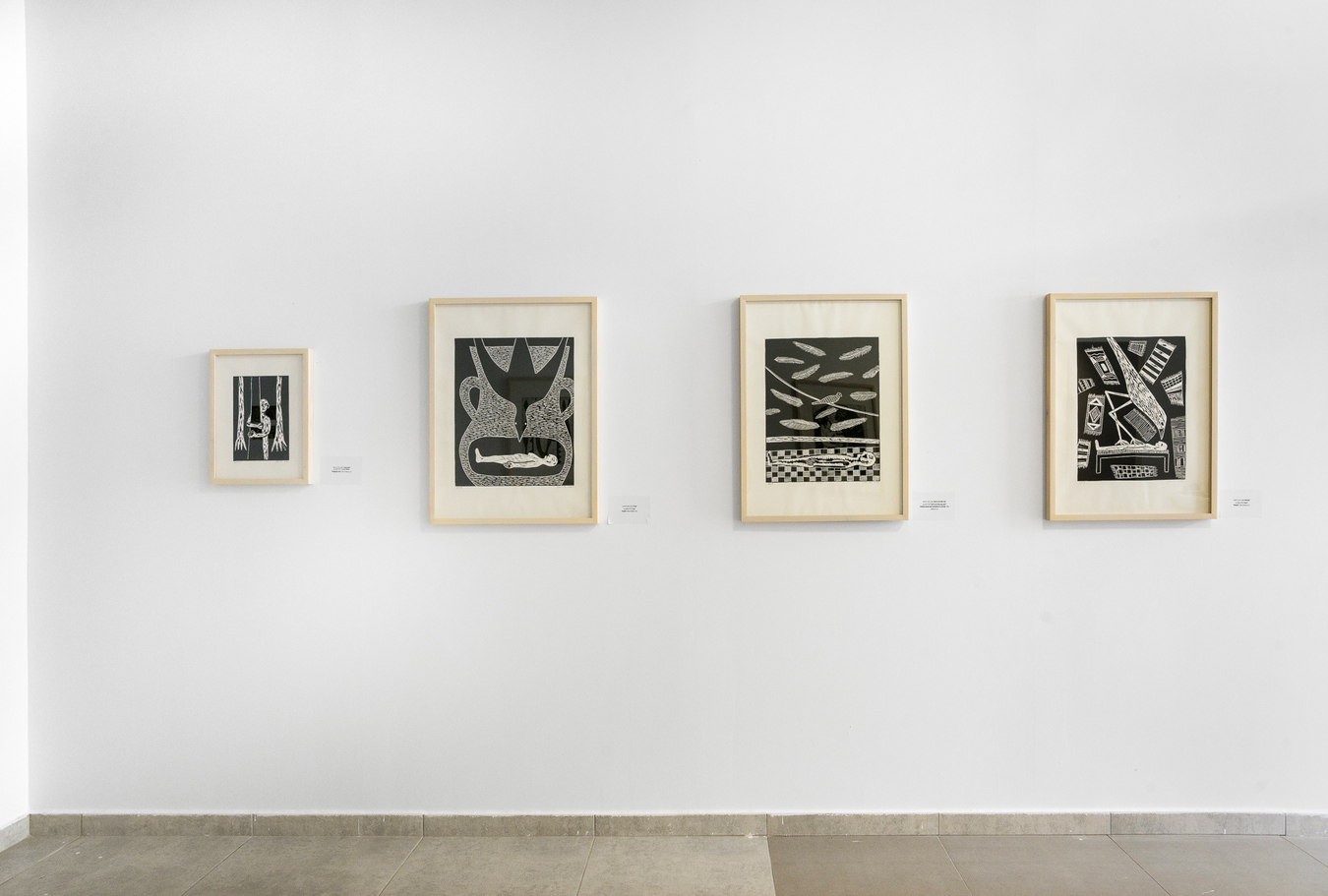
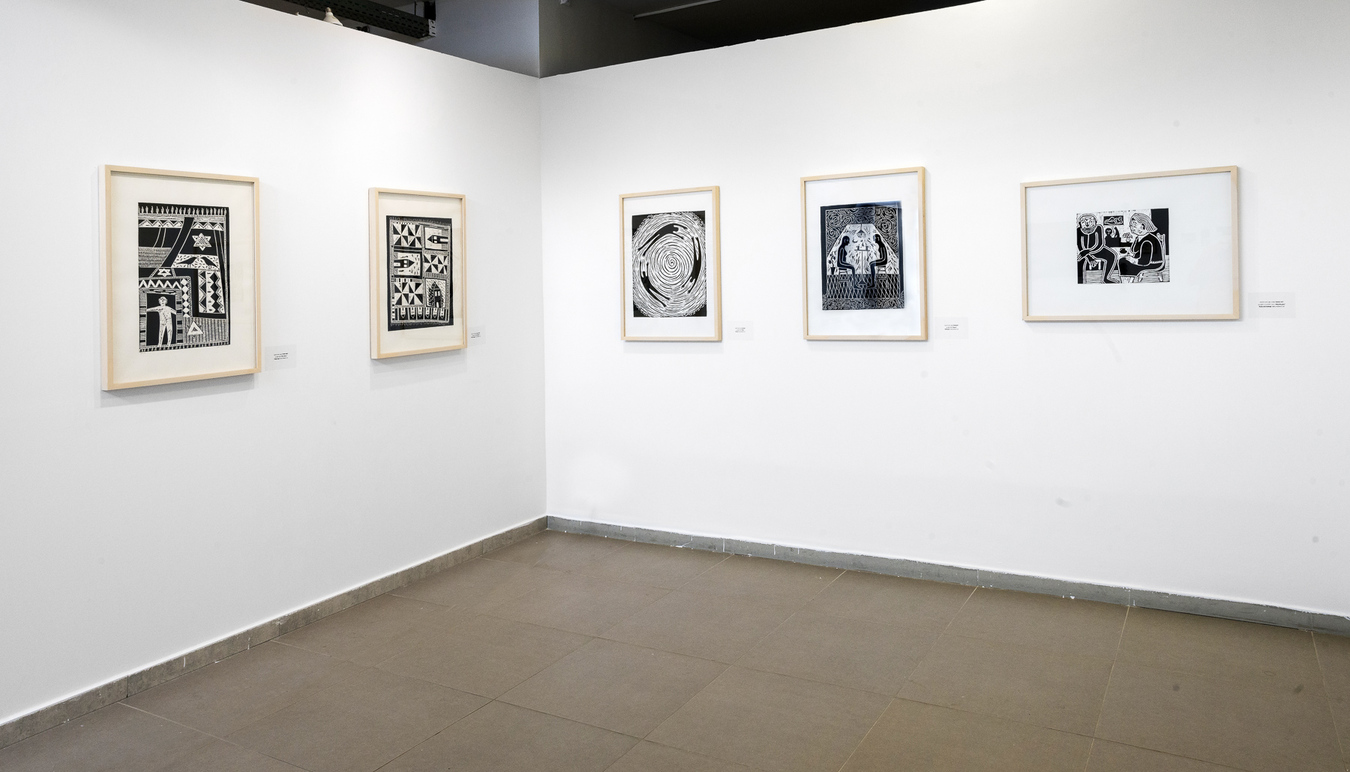
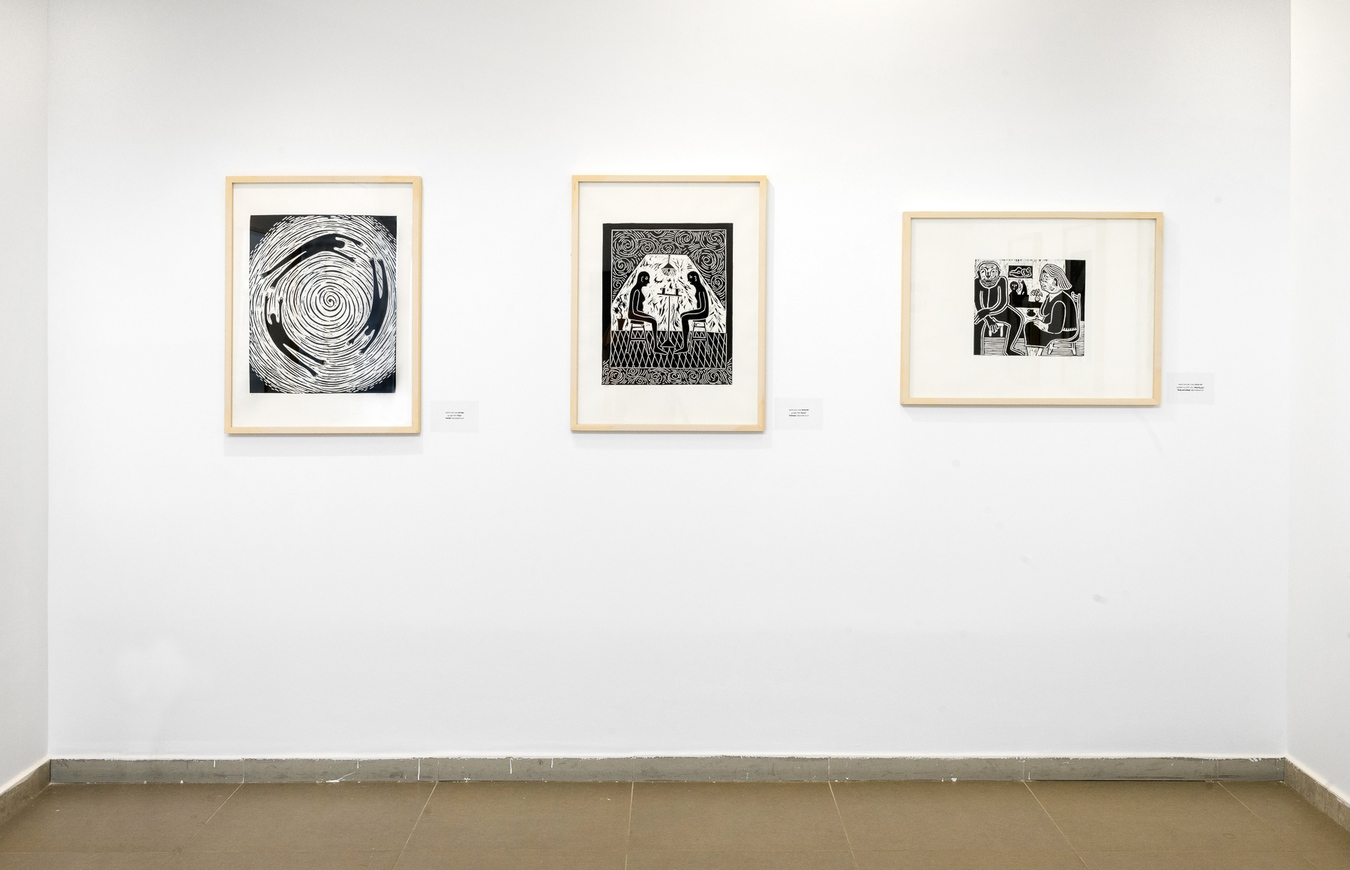
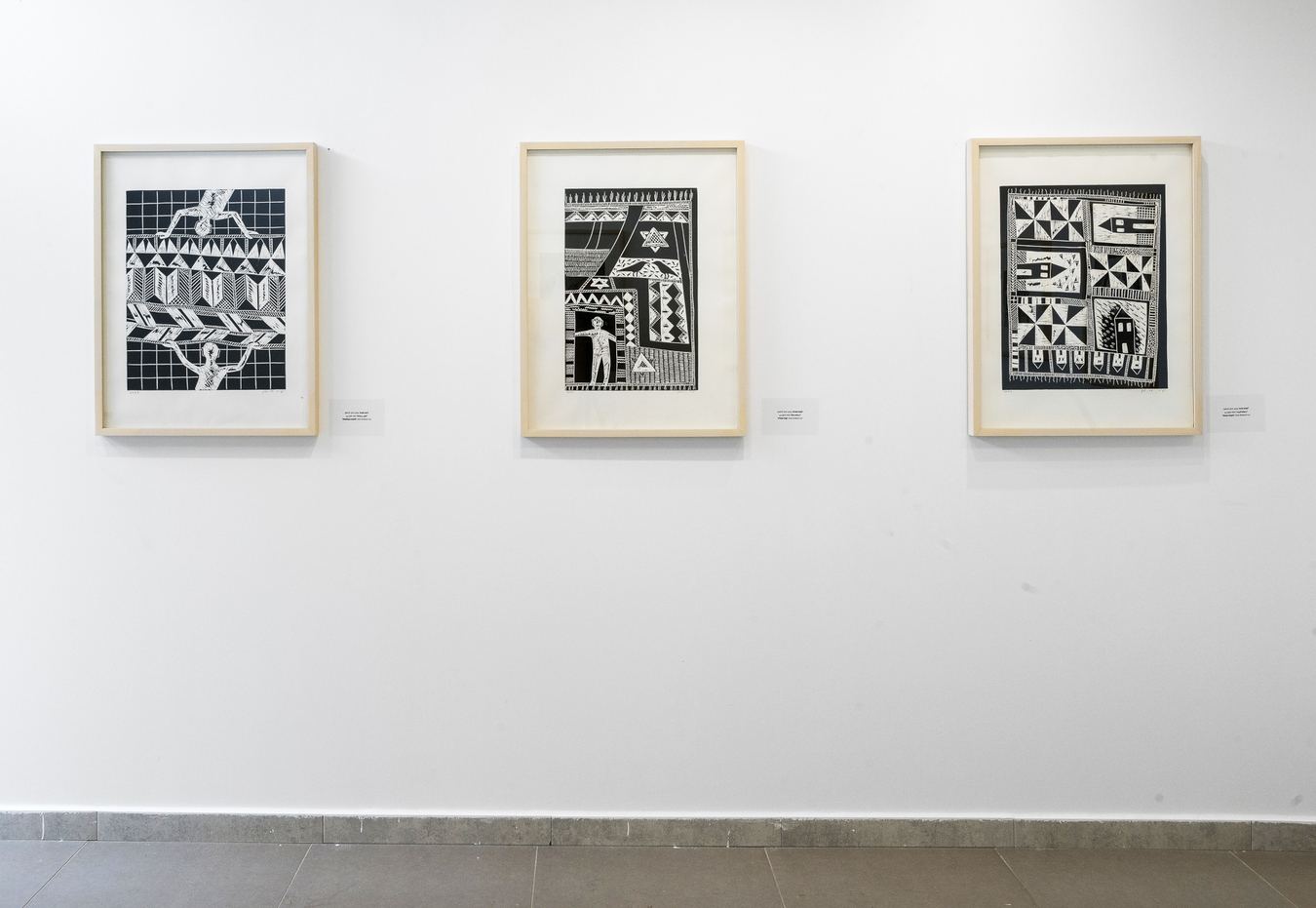
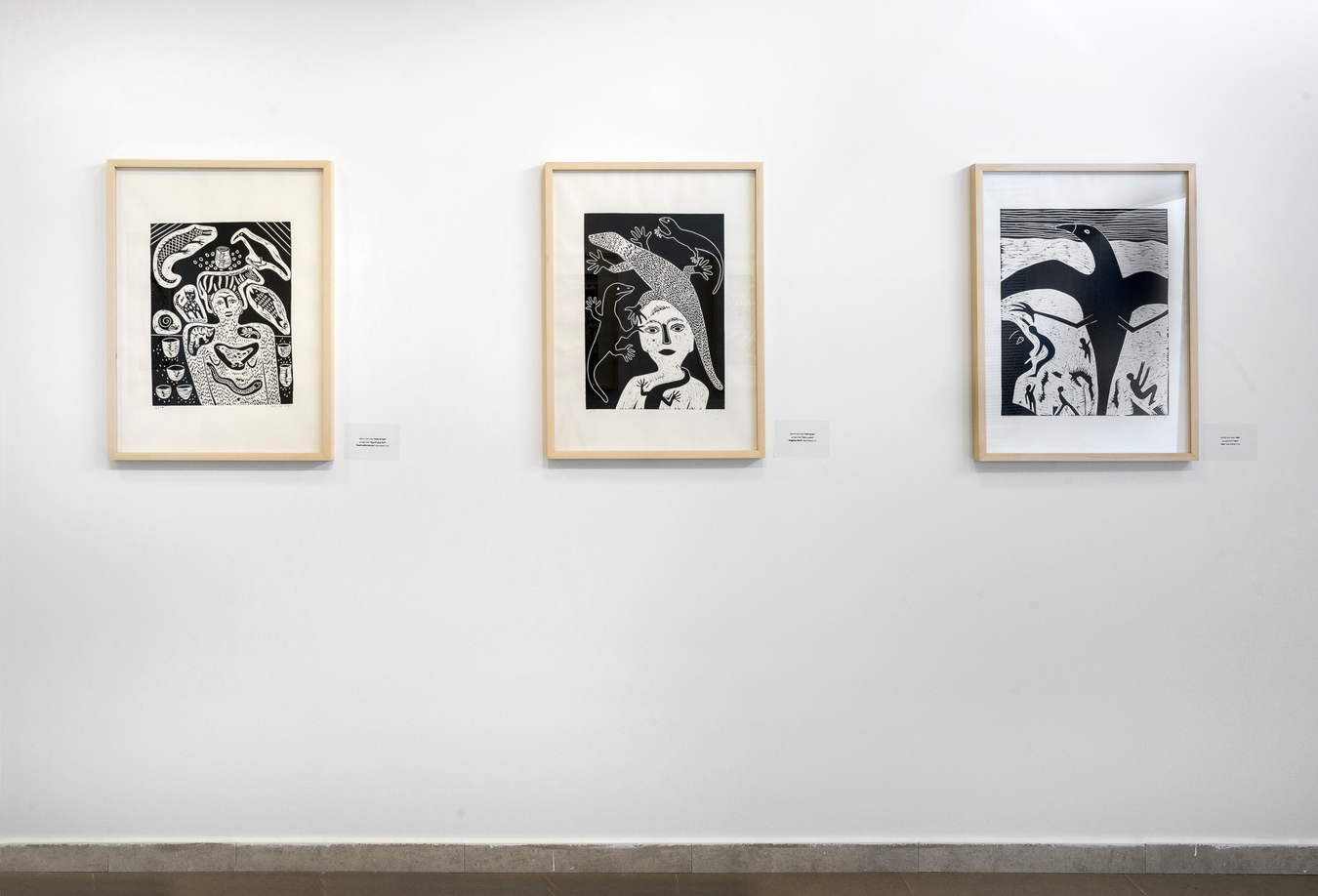
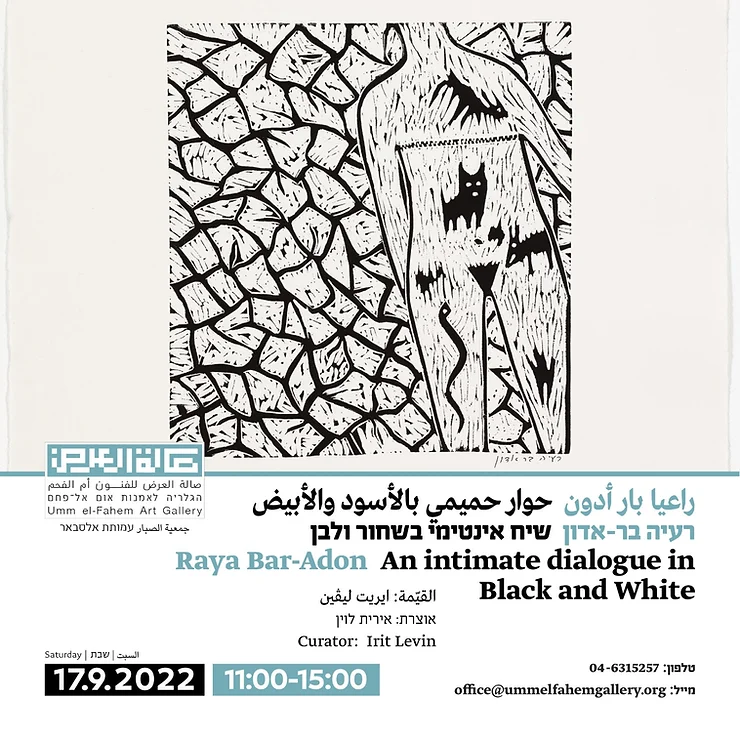
On display at the exhibition are linoleum prints in black and white, her predominant technique in the past six years. “Print leaves lots of room for the random, game-playing, and oscillation between the two-dimensional and the three-dimensional, like sculpture. I love the minimalism of the material and search for freedom in a technique that’s not free. In my works, black is heavier and white is light,” Bar-Adon says.
The art critic Uzi Tzur once said the following about the artist’s linoleum works: “Raya Bar-Adon’s linoleum cuts express the protest of the female voice in the 1960s and 1970s, like ethnological gestures to native art […]. The wealth of the textures that she produces from the linoleum surface, the way they flow, and the way they crowd together and expand should be examined as one would examine molecules and streaks of light.”
Human, animal, and avian figures dwell in the milieus of her works, trapped in internal labyrinths, along with jugs, rugs, universal motives, and twined plants. A profound connection with nature is evident in these works, echoing the artist’s childhood in Yavne religious collective settlement. Her father was the first biologist there, teaching and amassing the major collections of the kibbutz, and she often accompanied him. An echo of her living environment in the past six decades at Hofit, a small locality abutting a nature reserve, is evident.
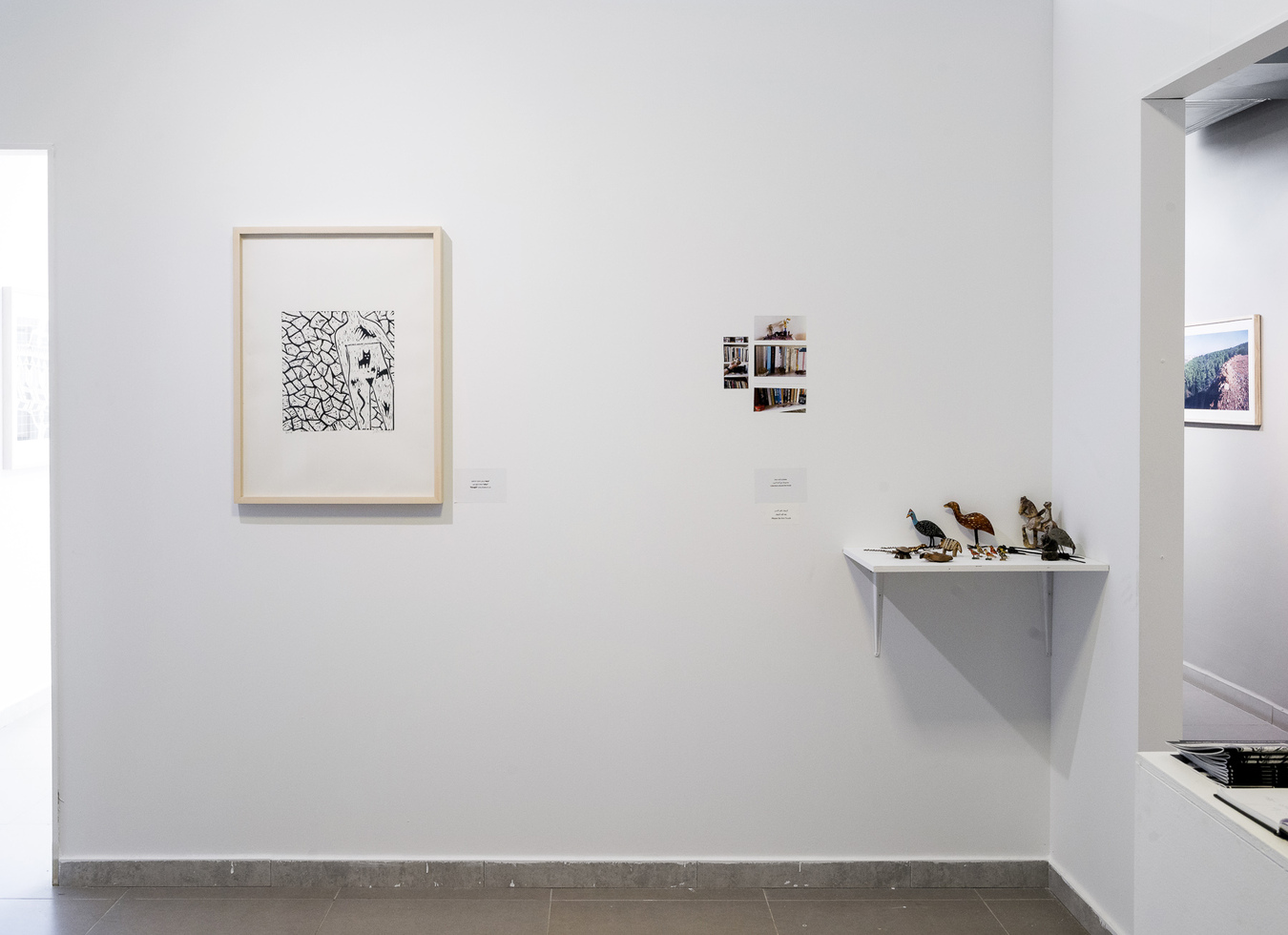
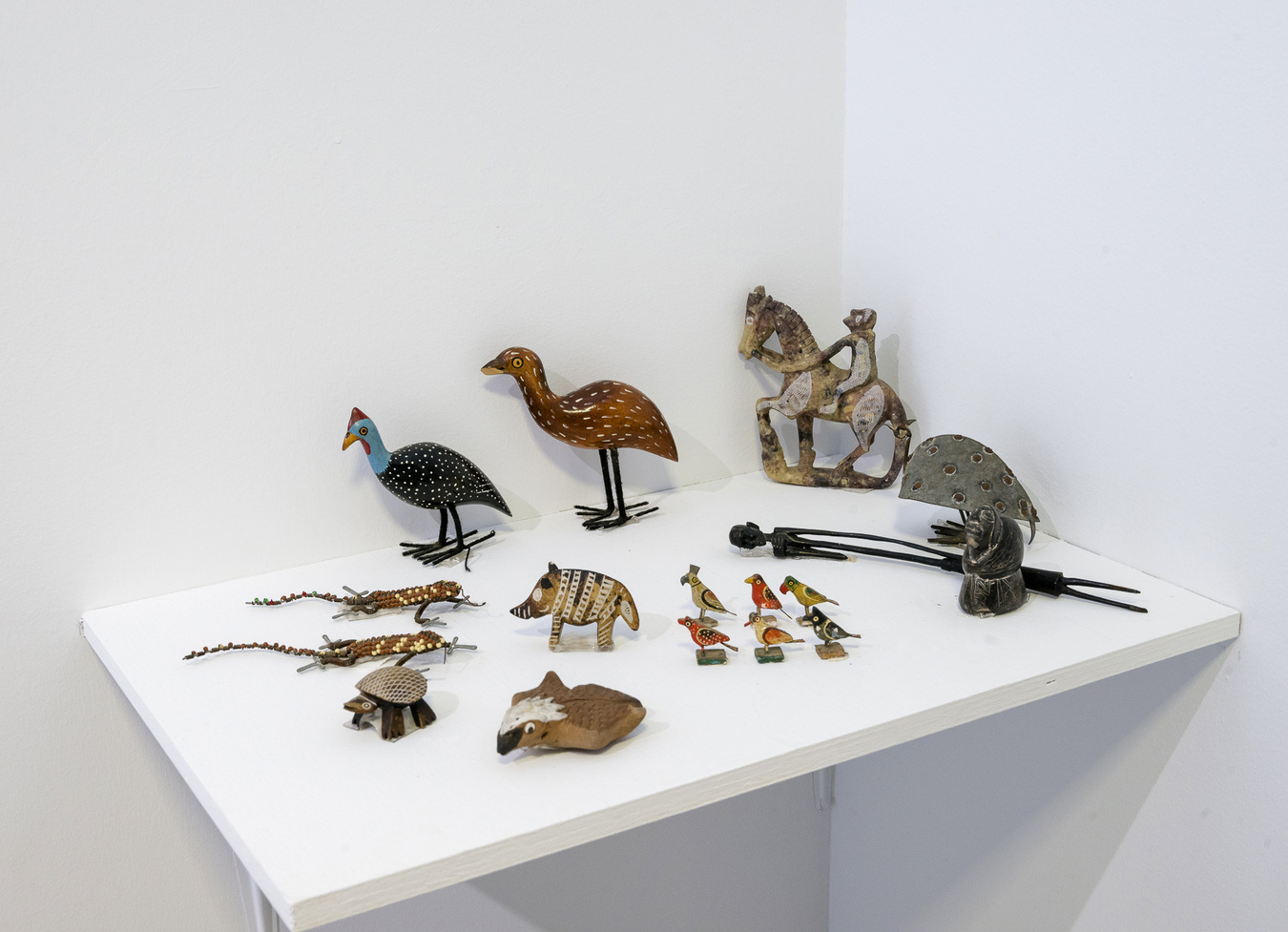
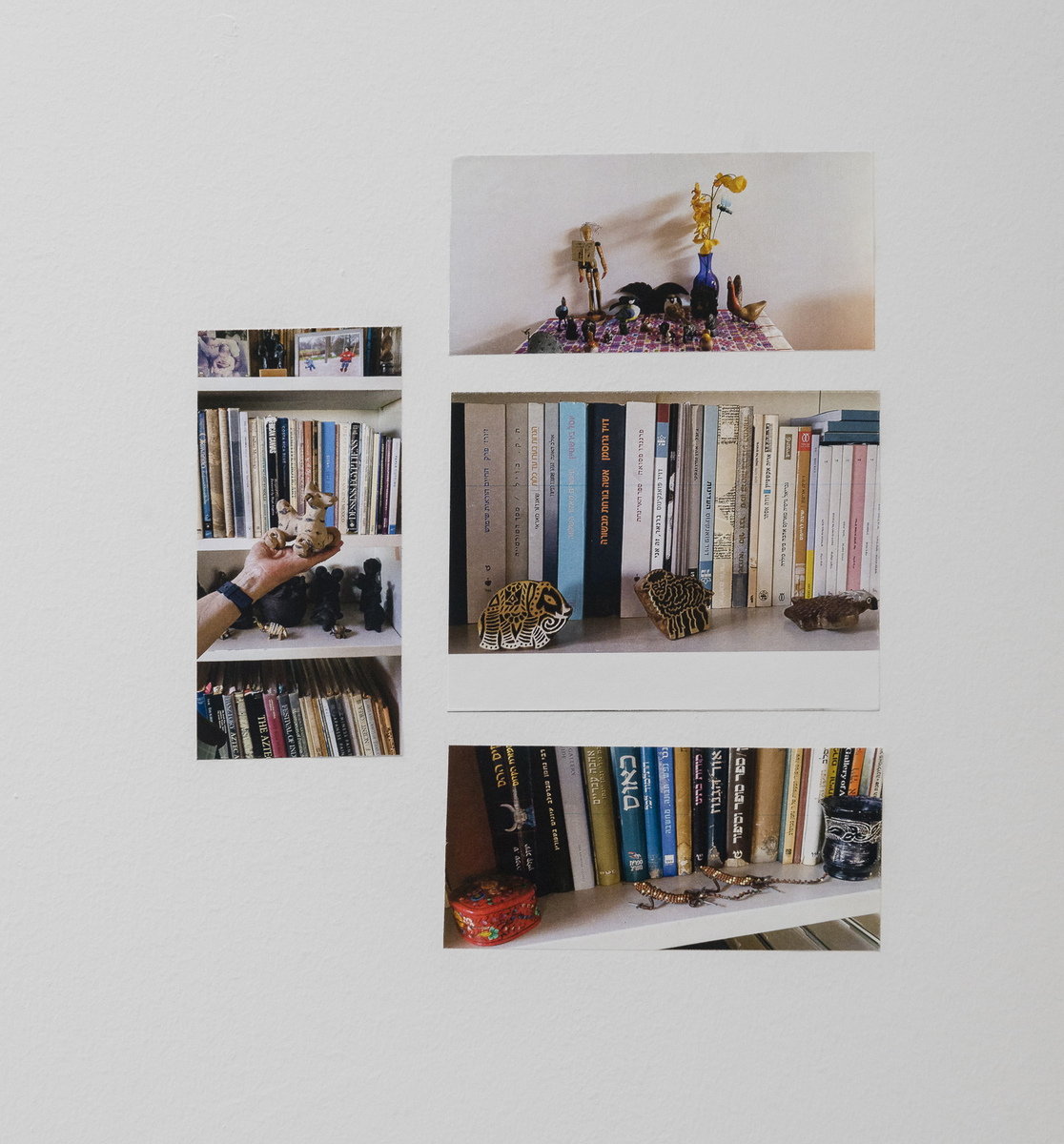
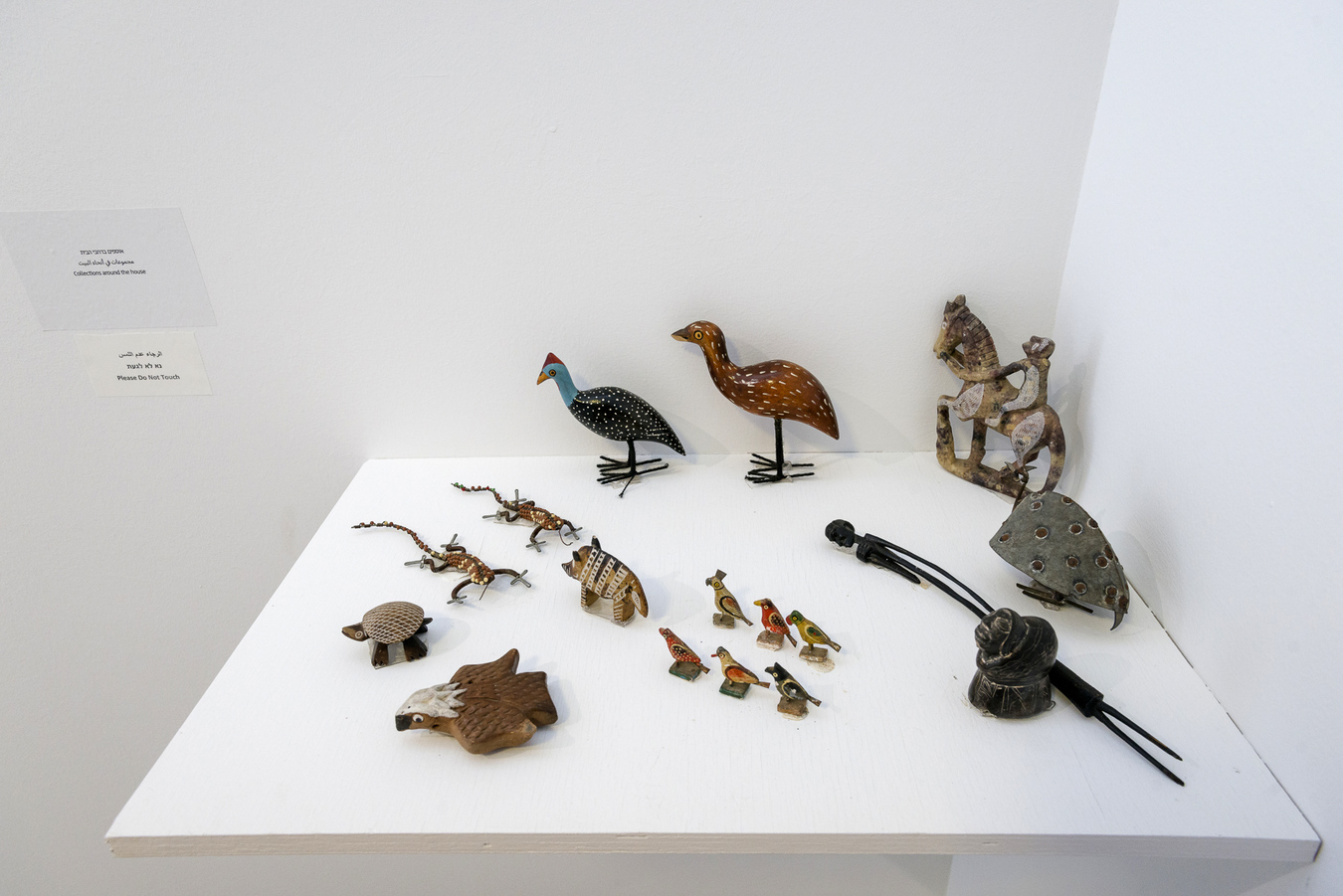
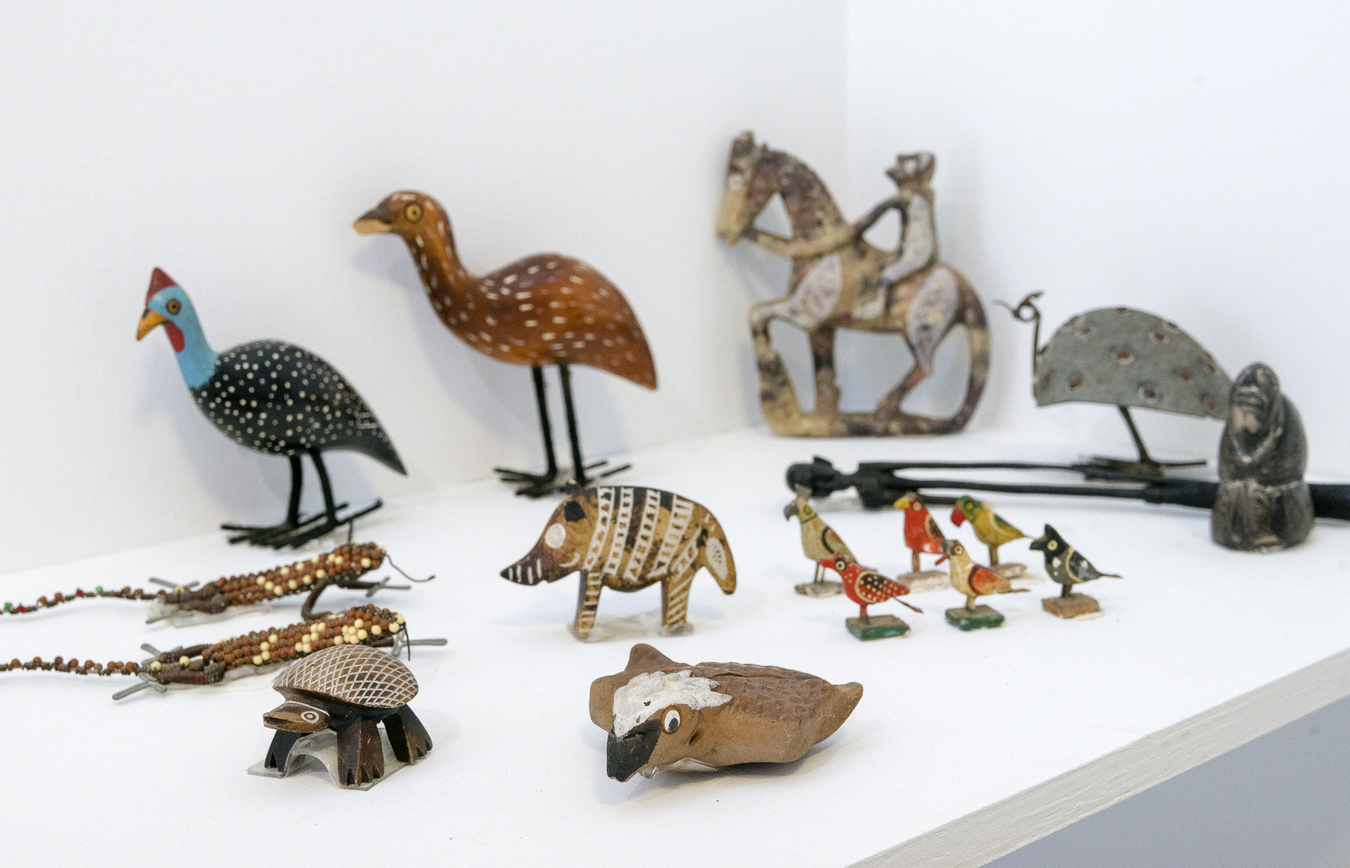
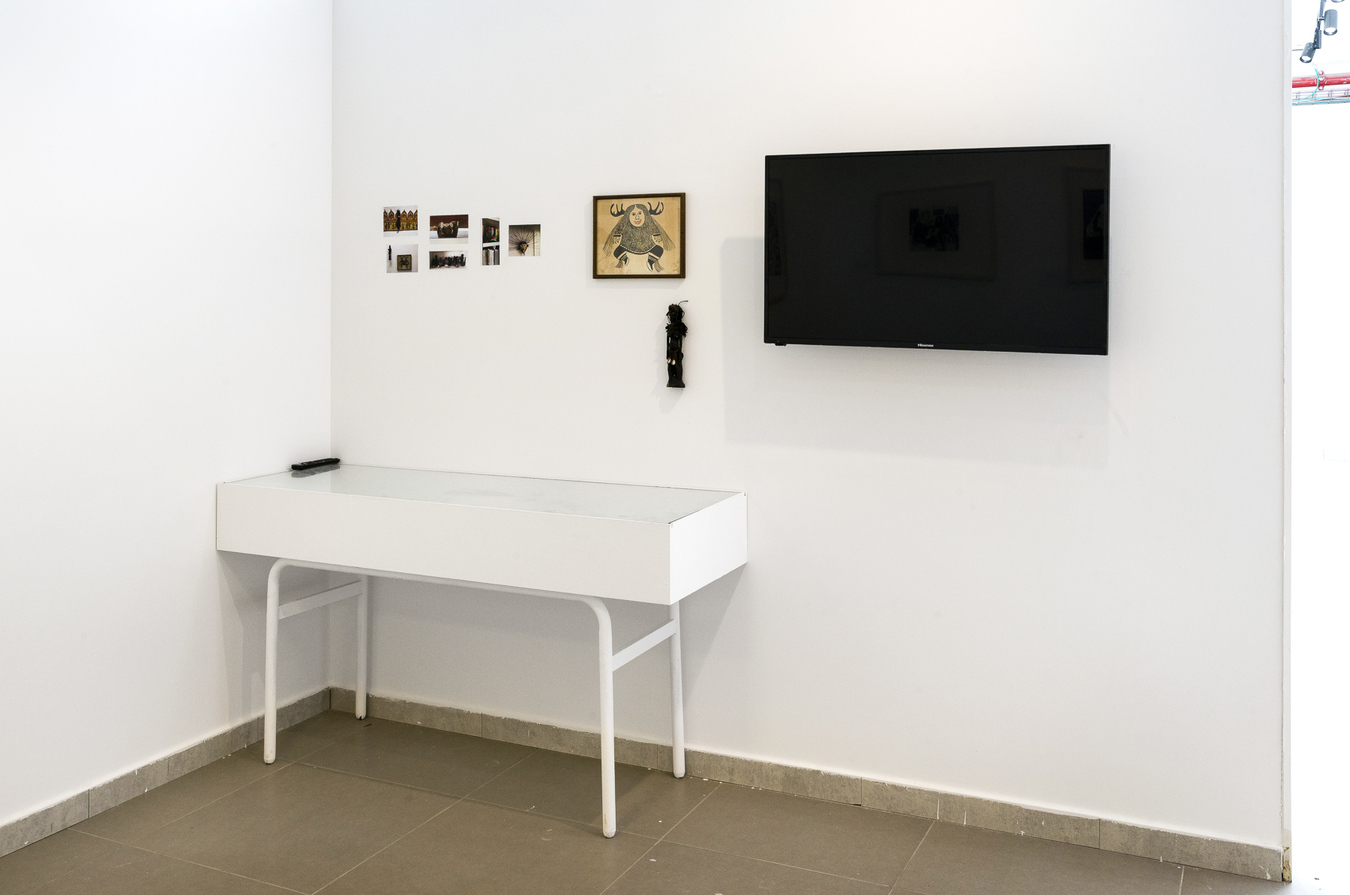
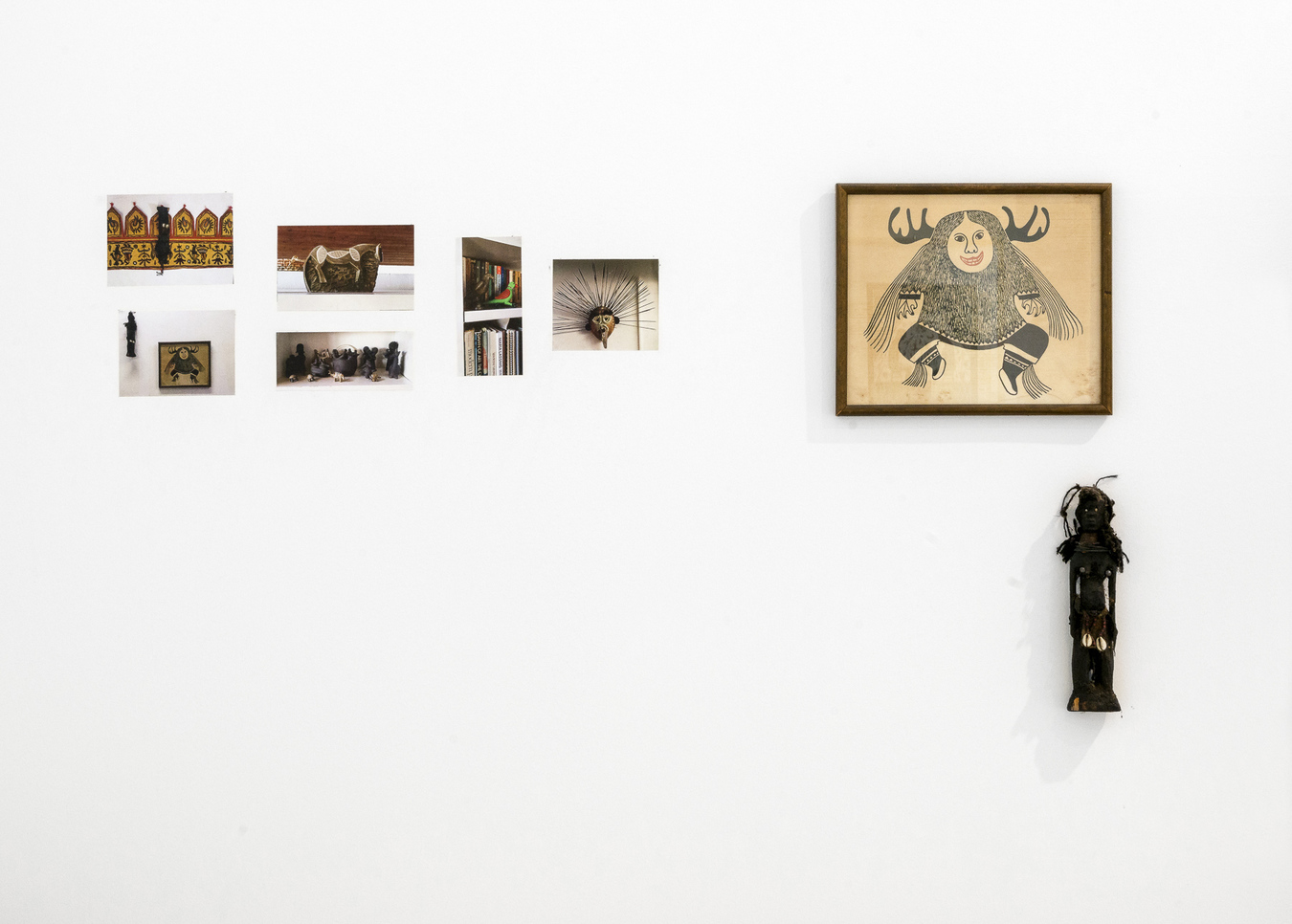
Many splendid collections fill the artist’s home and studio, most comprised of small pieces of tribal and ethnic art: masks, statuettes, textile creations, photos, and artifacts, mainly of animals. “I am strongly drawn to ancient and ethnic cultures. At the kibbutz there was a simplicity; no attention was paid to aesthetics of objects. My craving for objects comes from the vacuum that existed and the need for intimacy. I responded to both of them by collecting little things,” the artist relates.
Bar-Adon is influenced by primitivism—the primeval and basic way it expresses itself—and by ethnography, Art Brut, German Expressionism, material minimalism, and a wealth of visual rhythms. Her works exude a symbolism composed of personal contents and universal contents in a Jungian spirit.
Bar-Adon maintained a close friendship and collegial relations with the artists Rudy Lehman and Avraham Ofek, both of whom derived inspiration from their nearby surroundings. She was influenced by the conceptualization put forward by Lehman, who wished to make the most of substance and form, mainly of animals, and also by Ofek in his archetypical and allegorical perception of universal contents. In Bar-Adon, therefore, one can see conciseness, symbolism, and the influence of her quotidian living environment rolled into one. After Rudy Lehman’s death, Raya Bar-Adon printed his woodcuts at the request of Hedwig Grossman, his partner.
The artist dedicated many works to woman figures and to her own femininity. The women in her corpus, almost always alone, are positioned at the center of the composition, surrounded by animals and set in what appears to be a world of their own. Bar-Adon’s woman appears in a range of situations, including “The Madonna of the Black Cats,” “Feeding Birds,” and “Pregnant.” She is prone on cracked dry ground, in illness and in a dream. The images that appear in her works are often painted from an overhead view that flattens them. The animals who manifest within and without the woman’s body represent lusts, dreams, and fears; they create dynamic tension between the inner and the outer.
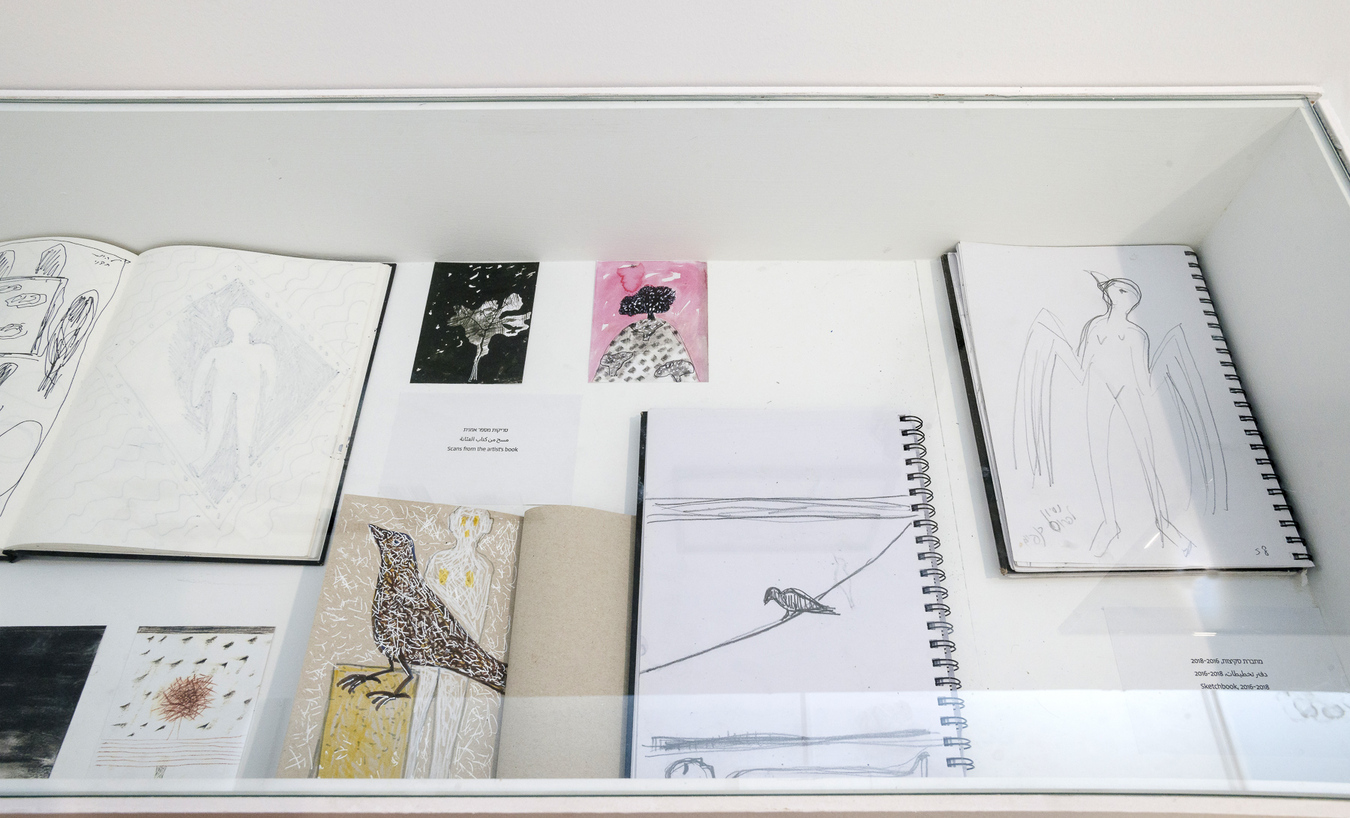
Birds are a recurrent motif in her works. They accompany the artist and attest to her states of mind and the aching of her body. They appear in the form of massive, terrifying ravens planted ornamentally on a rug and revealed in small and closed spaces or outside them.
Psychic landscapes of indoors and outdoors mingle with items from ethnic collections in Bar-Adon’s works, allowing the viewer’s eye to contemplate a rich inner world in black and white.
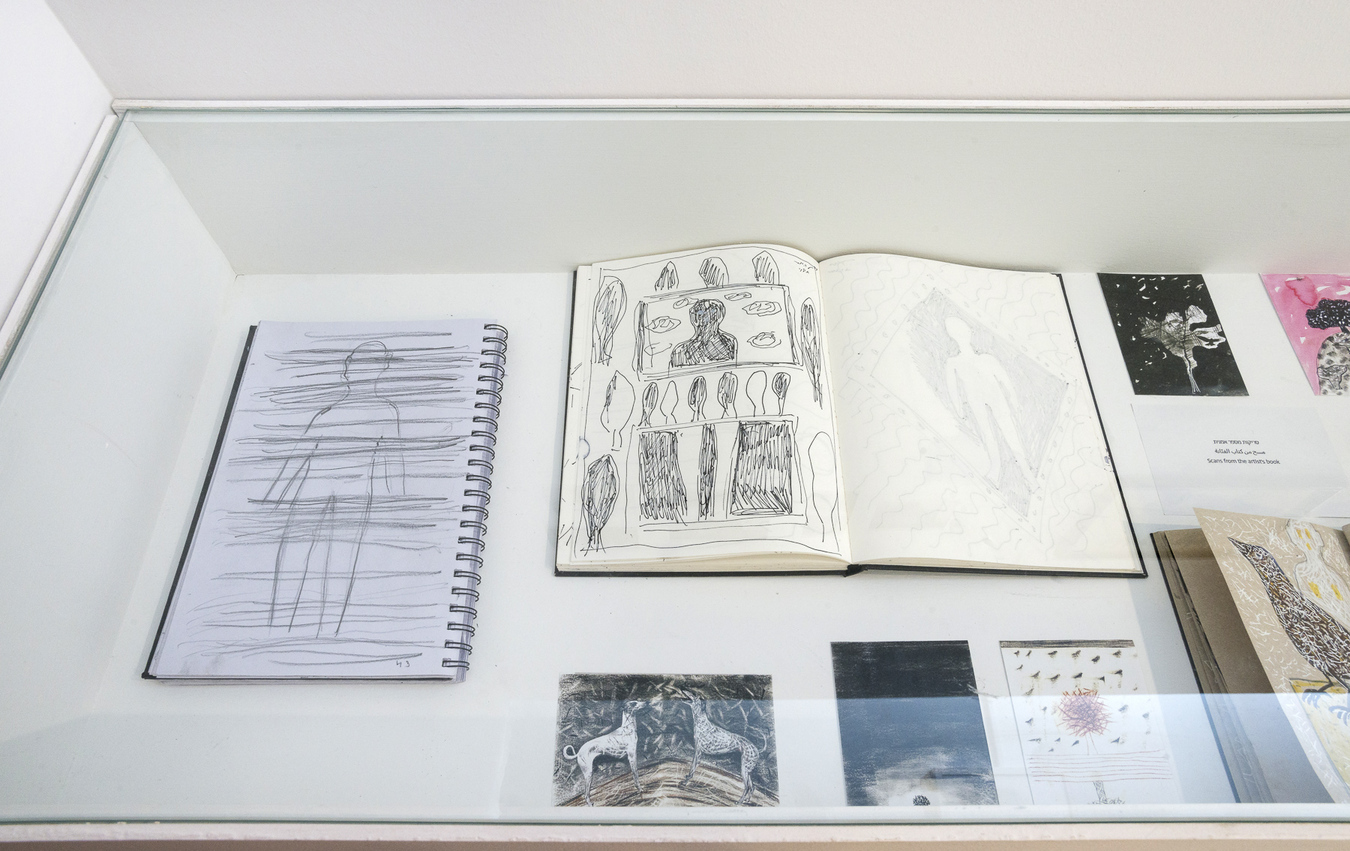
On display at the exhibition, in addition to the linoleum prints, are sketch books, notebooks of collages, items from collections, and a short film that documents the process that brought the works into being.
Curator: Irit Levin