
Fata Morgana | Meira Grossinger
Fata Morgana | Meira Grossinger
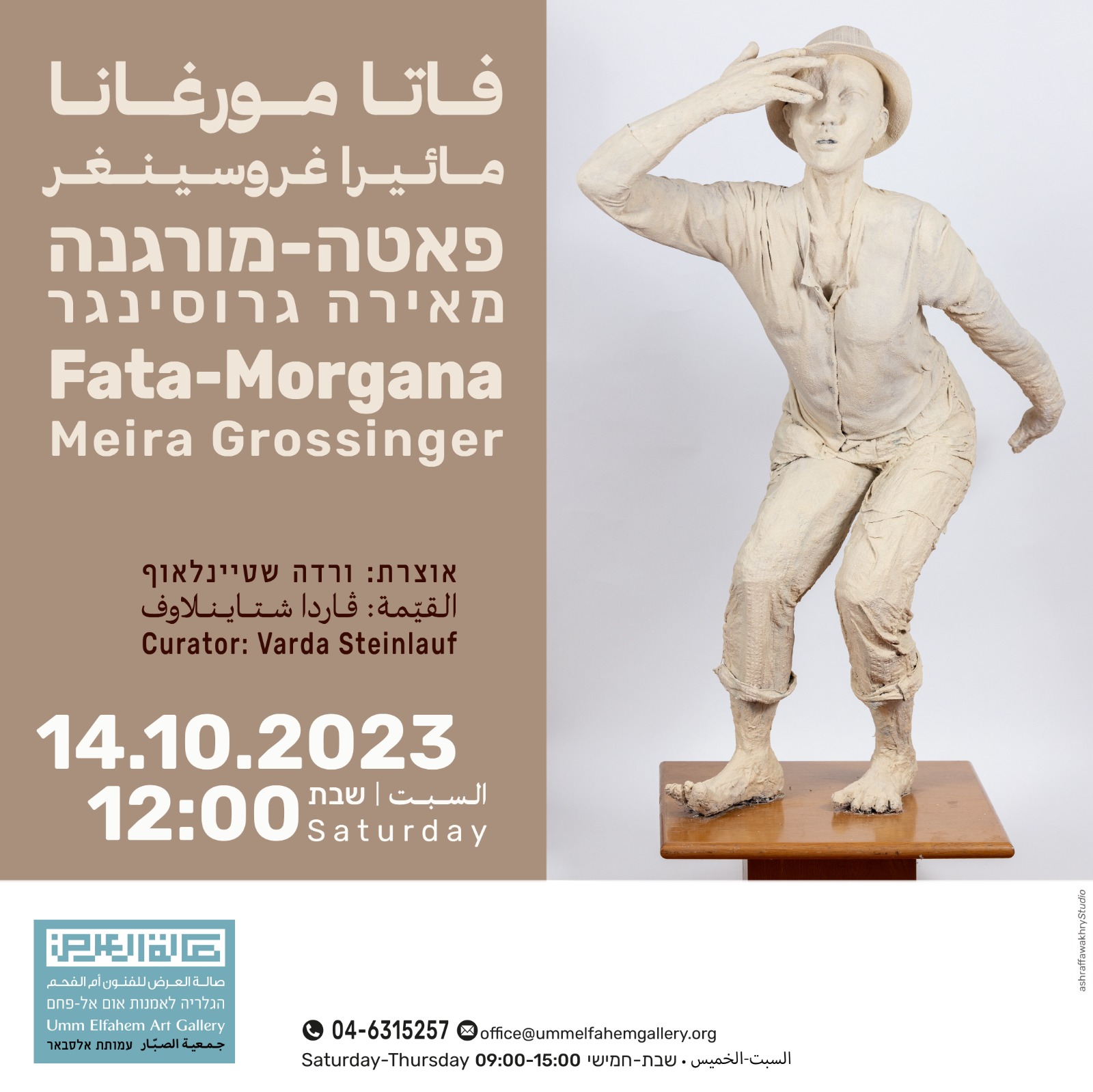
Meira Grossinger | Fata Morgana
Meira Grossinger’s installation Fata Morgana is a site-specific sculptural setting created especially for the gallery in Umm el-Fahem. Every angle reveals a new facet that makes up the whole, evoking a continuous experience and making the viewers active participants. As we walk around the sculptures, we become engulfed by a mindset of constant vigilance within a mysterious world, both fascinating and daunting at the same time. The non-human blends with the human and is charged with a threatening vivacity. The installation is imbued with an unlimited creative spirit, featuring “high” art alongside “low” art, art that no longer shatters artistic boundaries, now shattering taboos. The title of the exhibition, “Fata Morgana,” expresses an unfulfilled longing that stems from a strong desire and an existential need for hope that entails disappointment and despair; the term refers to a mirage, an illusion which promises no real solution to one who approaches it.
Grossinger orchestrates ensembles of sculpted figures that convey mental states of suffering, anxiety, danger, trauma, and permanent alertness; existential states alluding to events that allegedly occurred in her life or ones that are still occurring around us in Israel and the world. The sculptures are coated with a uniform industrial substance used in construction, expressing petrification, fixation, and stasis.
Quilted animal figures made of rags and fabric scraps, some made of synthetic furs, screaming imperfection, are installed in the space. The doll-like figures are part of a series created by Grossinger in 2018–20, articulating the insight that even animals in nature do not live in perfect harmony; they also kill each other, often with man’s assistance. These “dolls” were not intended for play. They lack sweetness and innocence. Somewhat distorted, they convey fear, anxiety, and trauma. Grossinger’s dismembered sculptures are akin to taxidermies, “innards” which neither conjure up nor resemble the original animal.
Paradoxically, the essence of the installation lies in what it leaves out. The artist does not touch directly on all the themes at the core of the work, but the viewers are nevertheless aware of them and fill in the gaps with their cultural knowledge. They are well-aware of the source of grief since the world has lost its color. The sculptures are painted in a neutral hue, their “skin” exposed as an empty shell. Grossinger confronts the viewers with the question: How do we, as a society, internalize cognitive conditioning and learn to accept a violent presence as a matter of course? What is the “human” as opposed to the “non-human”?


