
Moment before another moment -
Naomi Zach gropes her way towards understanding the event, searching for answers to rising questions and interpretations, thus trying to rise above survival instincts. The discussion that this exhibition creates is: How does modernity view the past, and how does it deal with it? How does it allow the viewer to enter this discussion without feeling embarrassed or retreating? Embarrassment on the one hand and beautiful works on the other. This ‘paradox’ is essential to create the tension between the apparent and the incomprehensible, the visible and the hidden, the present and the past. It presents the confrontation of the viewer with the individual, the historical and the professional, and invites the viewer to adjust it to their point of view – thereby trying to create relationships, interactions, sensual expressions and ways of thinking. The exhibition also contains individual formulations and subjective responses to collective concerns and to confusing questions shared by the individuals. Artists and intellectuals interpret them, each in their own way and according to their own perspective… This exhibition expands beyond the boundaries of the artist and her culture and touches on the human identity that is fighting the oblivion.
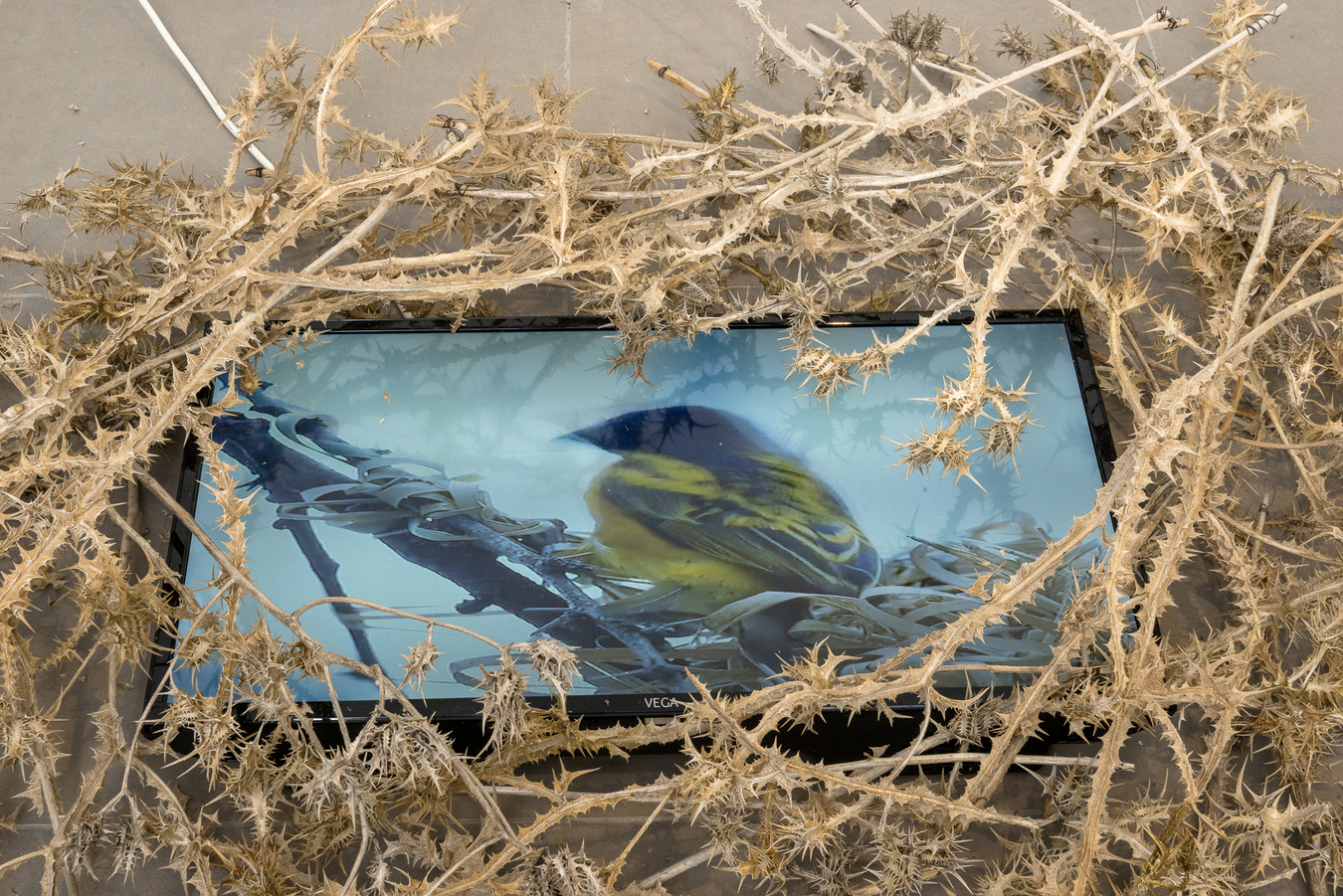
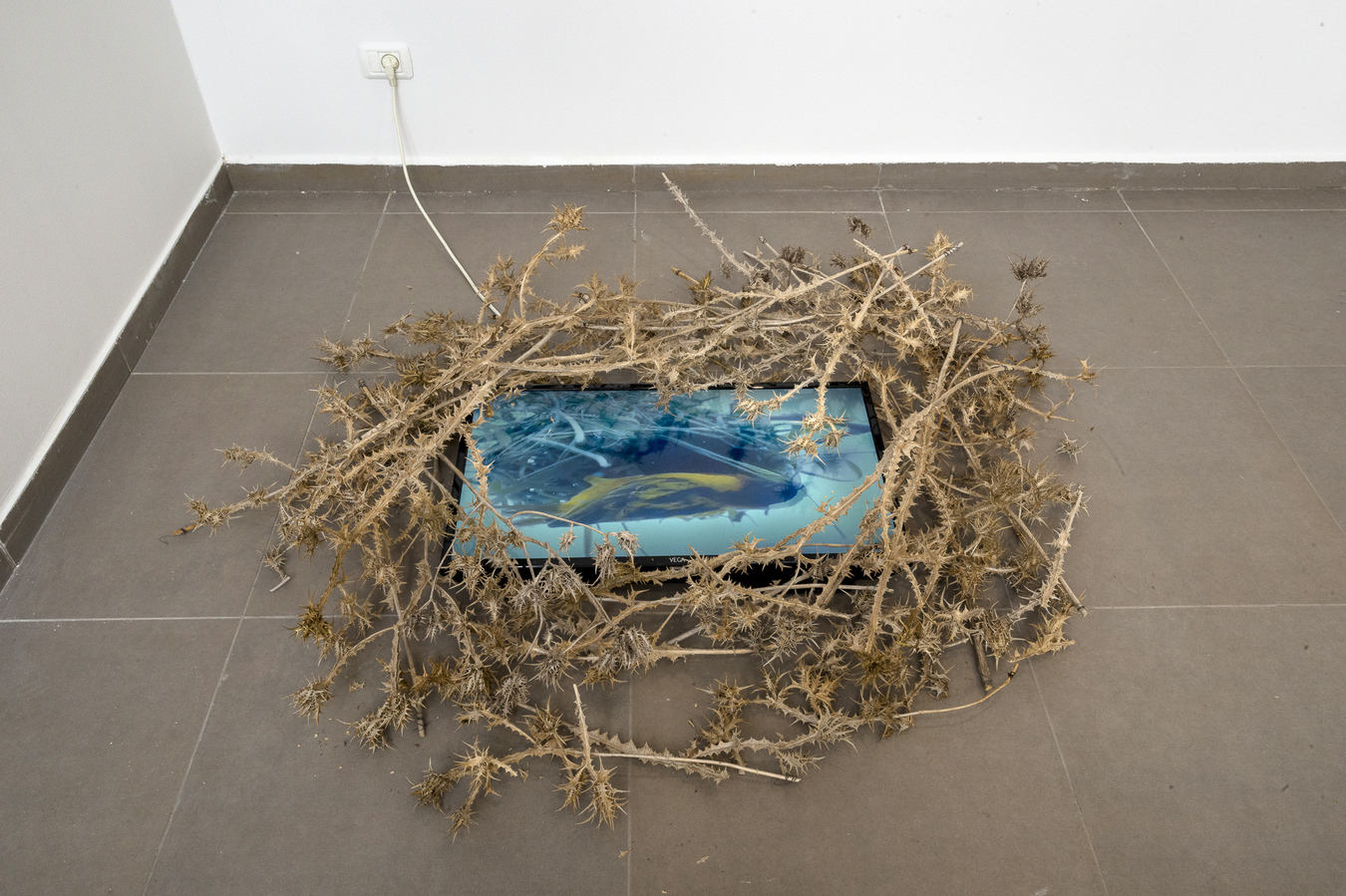
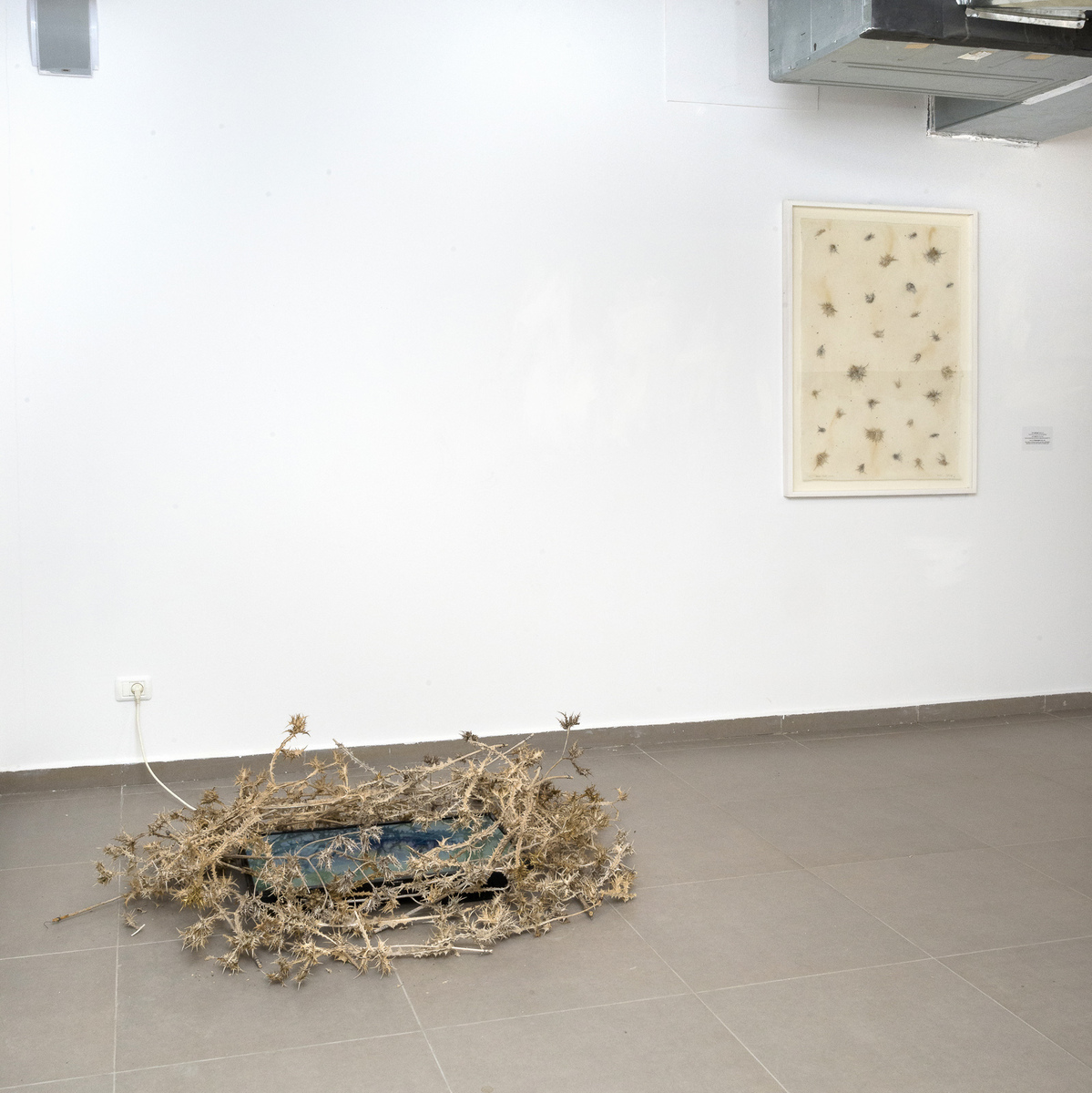
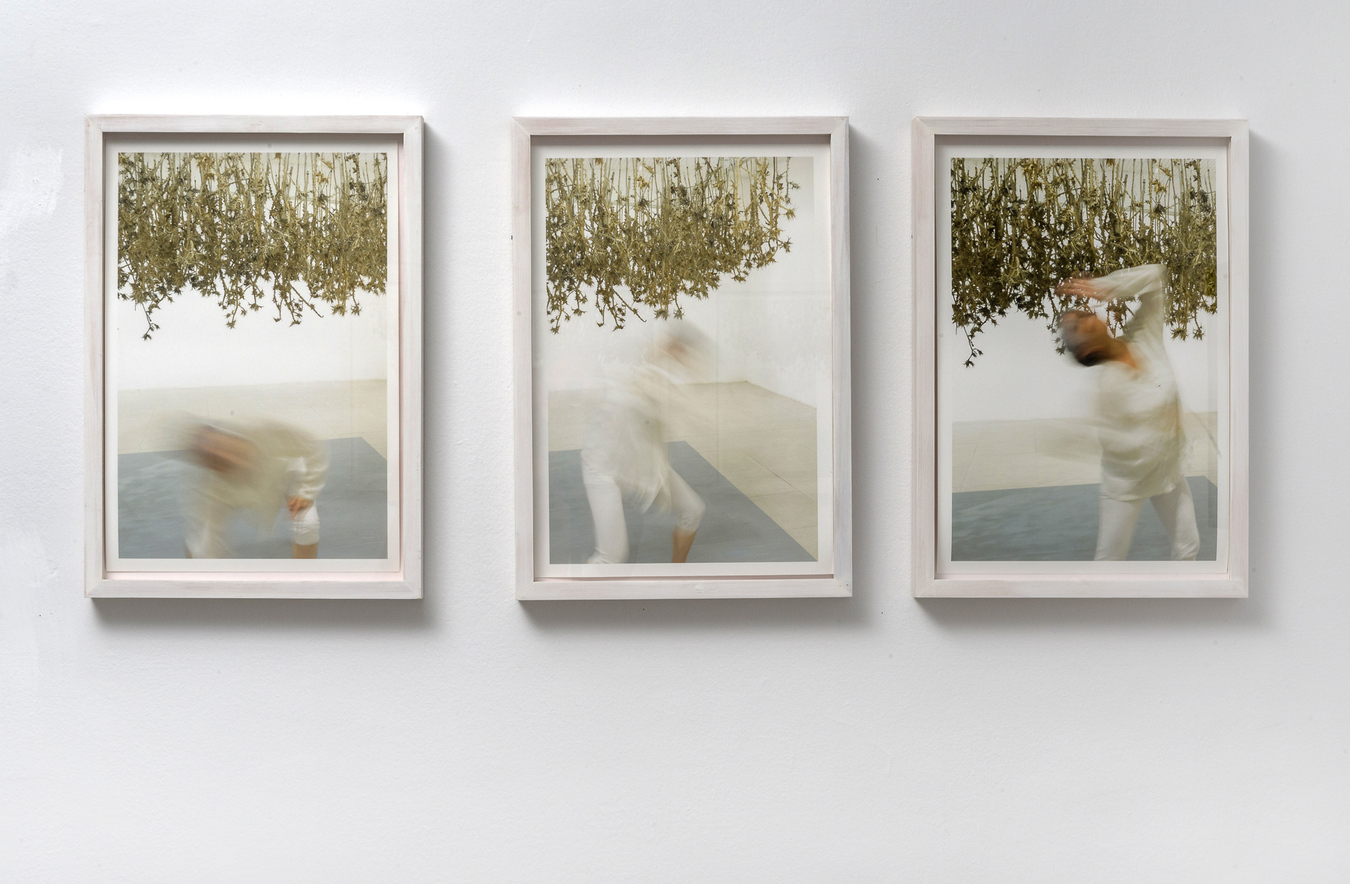
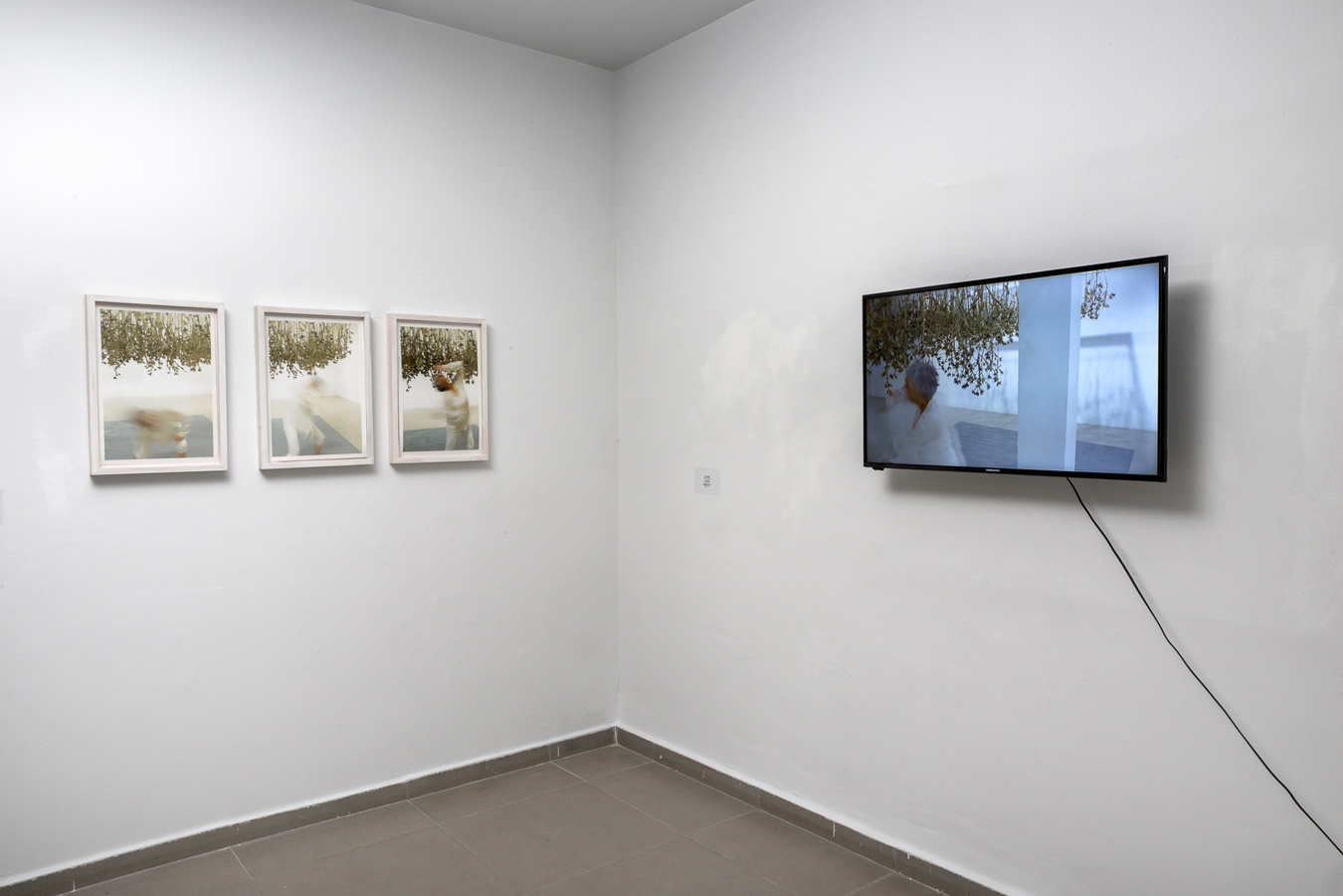
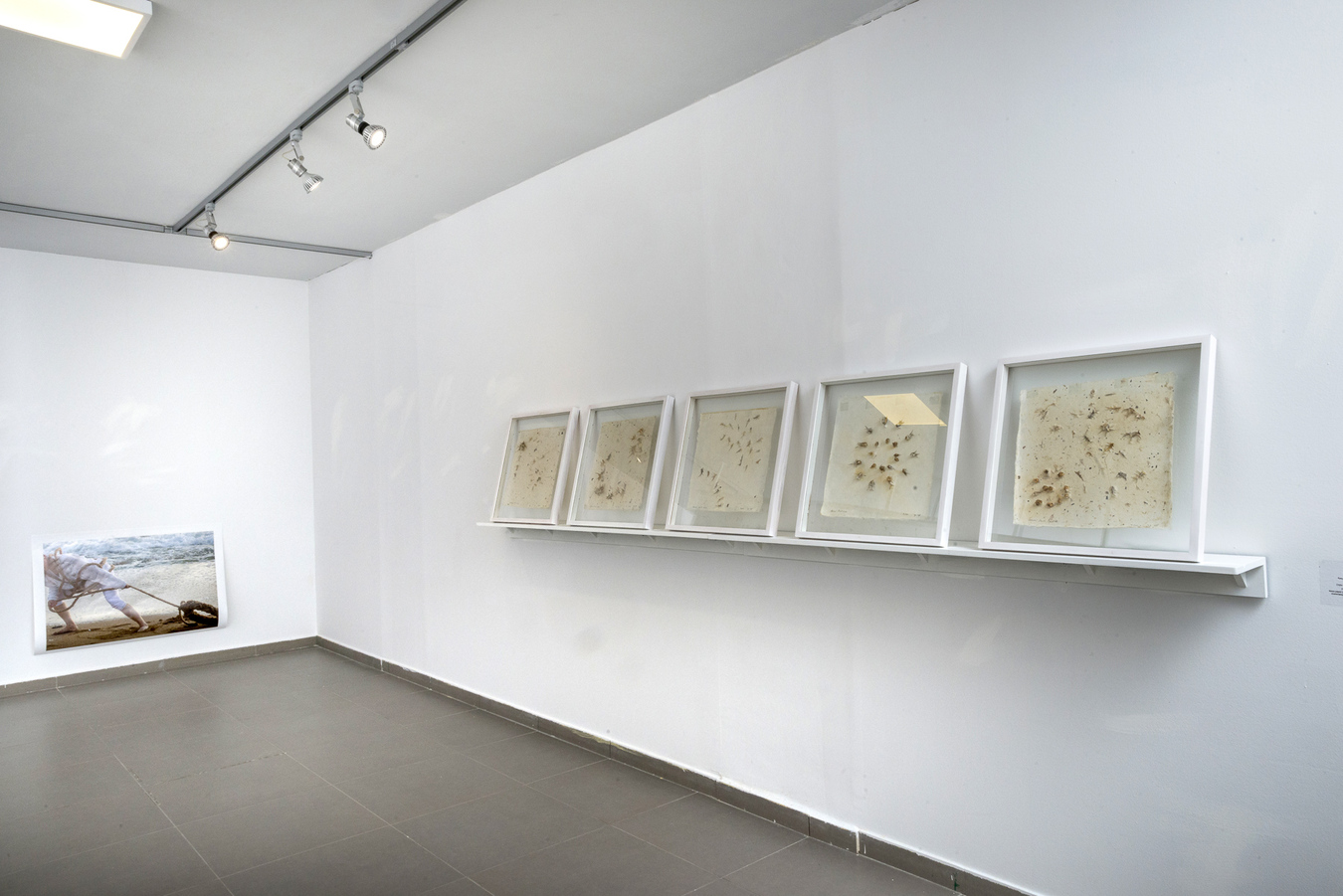
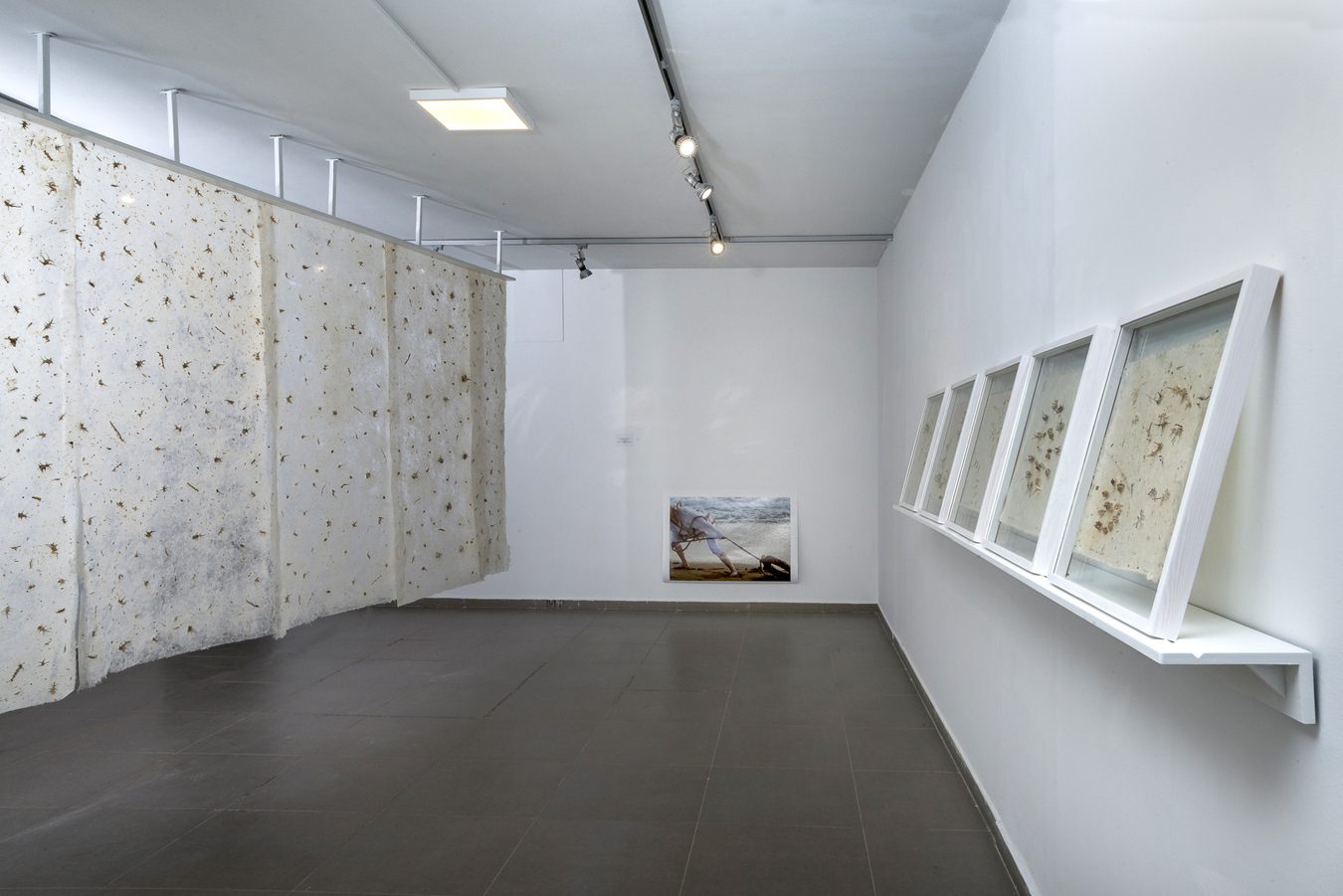
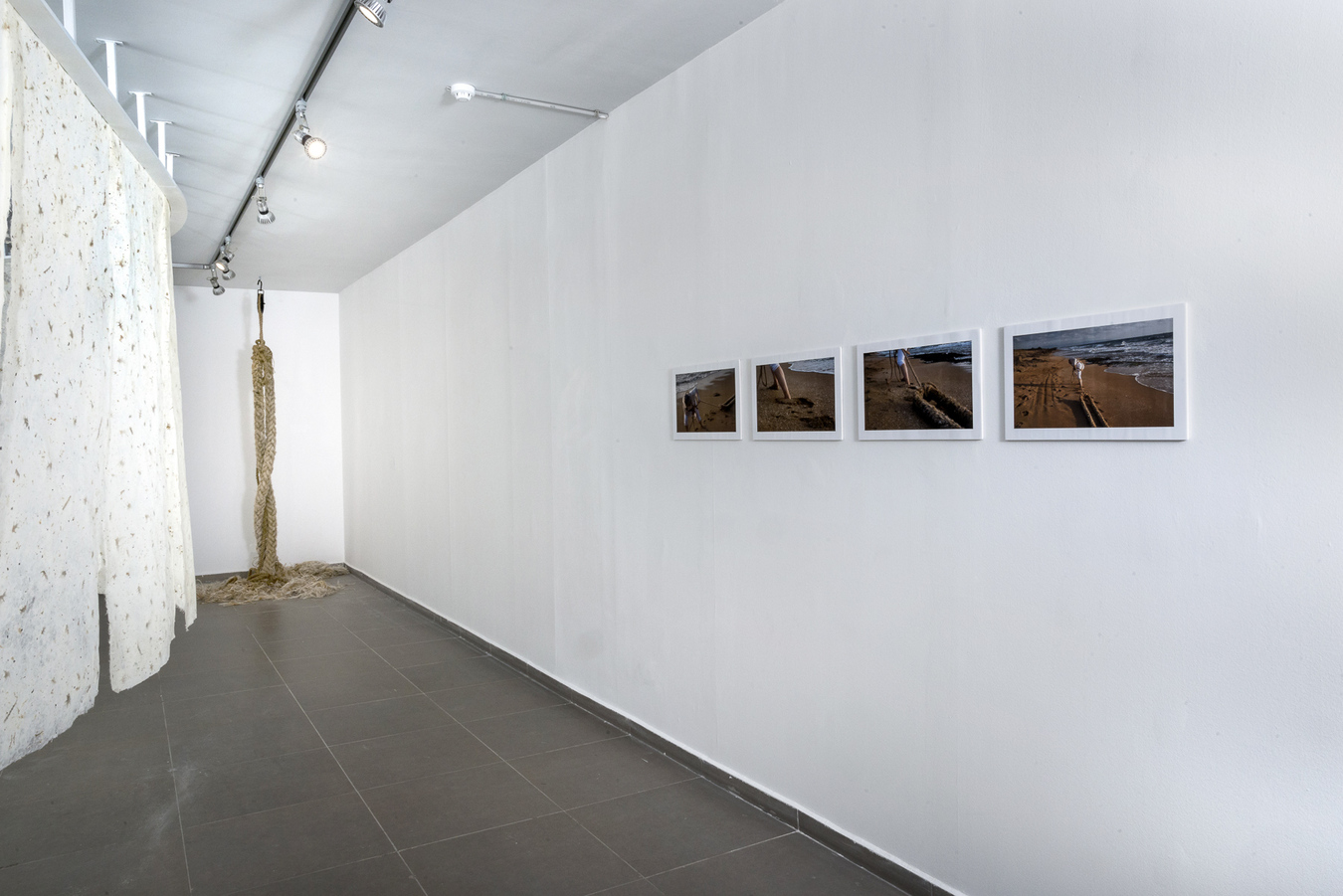
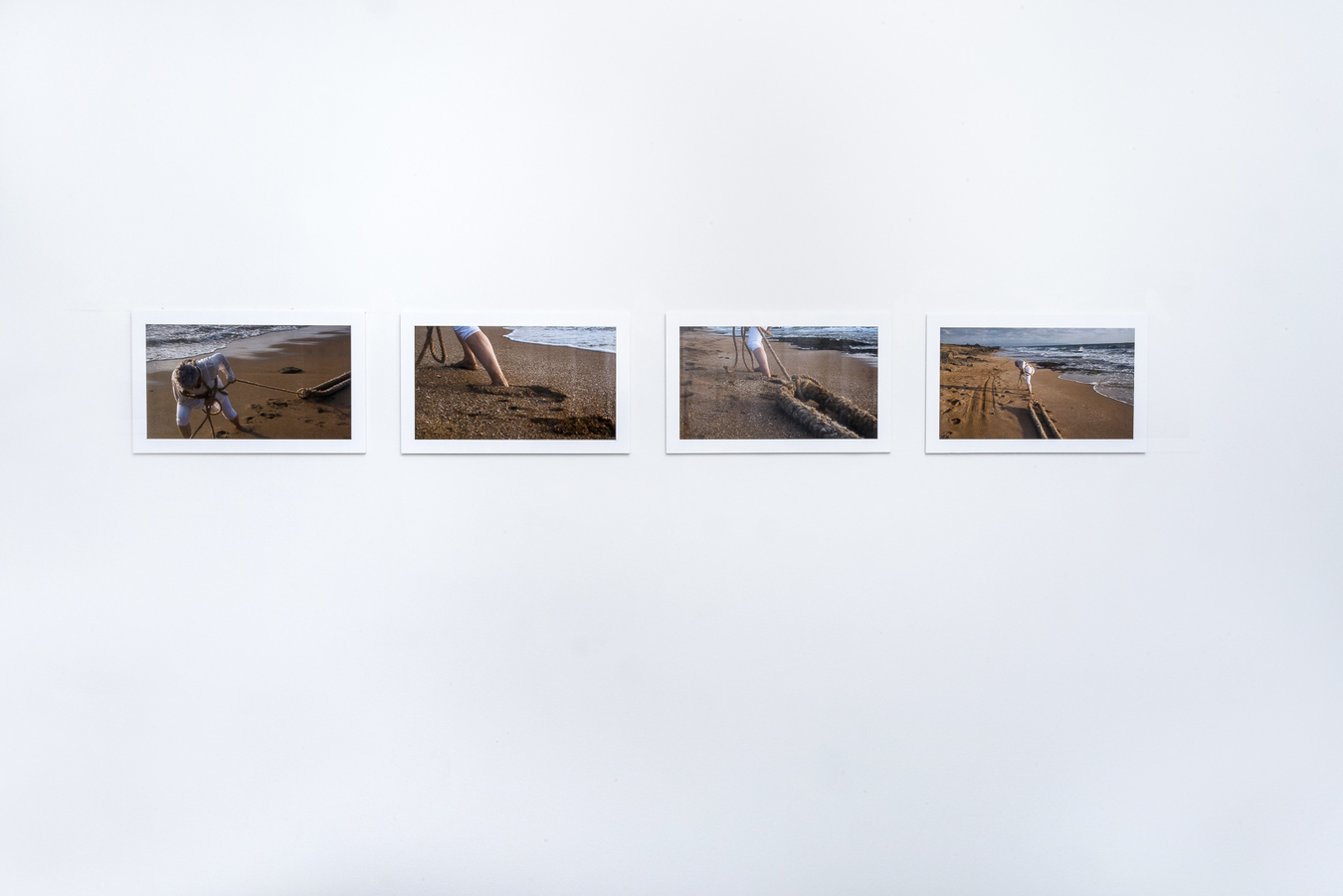
The exhibition bears artistic rhythms that we observe through the masses and surfaces that are mainly formed of multilingual artistic units. Such is the case with the installation work – the curtains – in the middle of the hall. The exhibition includes three video works: The first, Hanging Field, the second, Moment Before – Another Moment, and the third, Weaver, showing a songbird weaving its nest. The work is displayed on the ground inside a heap of thorns – holding within its folds a kind of abstinence.
Abstinence – Sufism is a spiritual act connecting art and aesthetics, unification of the subject with the object. The Enlightenment replaces logic and point of view. Knowledge is an emotional experience that fills its owner with feelings of power that flood the enlightenment. In this way, the internal spiritual aspect in art is similar to Sufism. Art is almost a semi-religious experience – personal and sensual – that exists behind the senses and is not subject to laws of logic or reality.
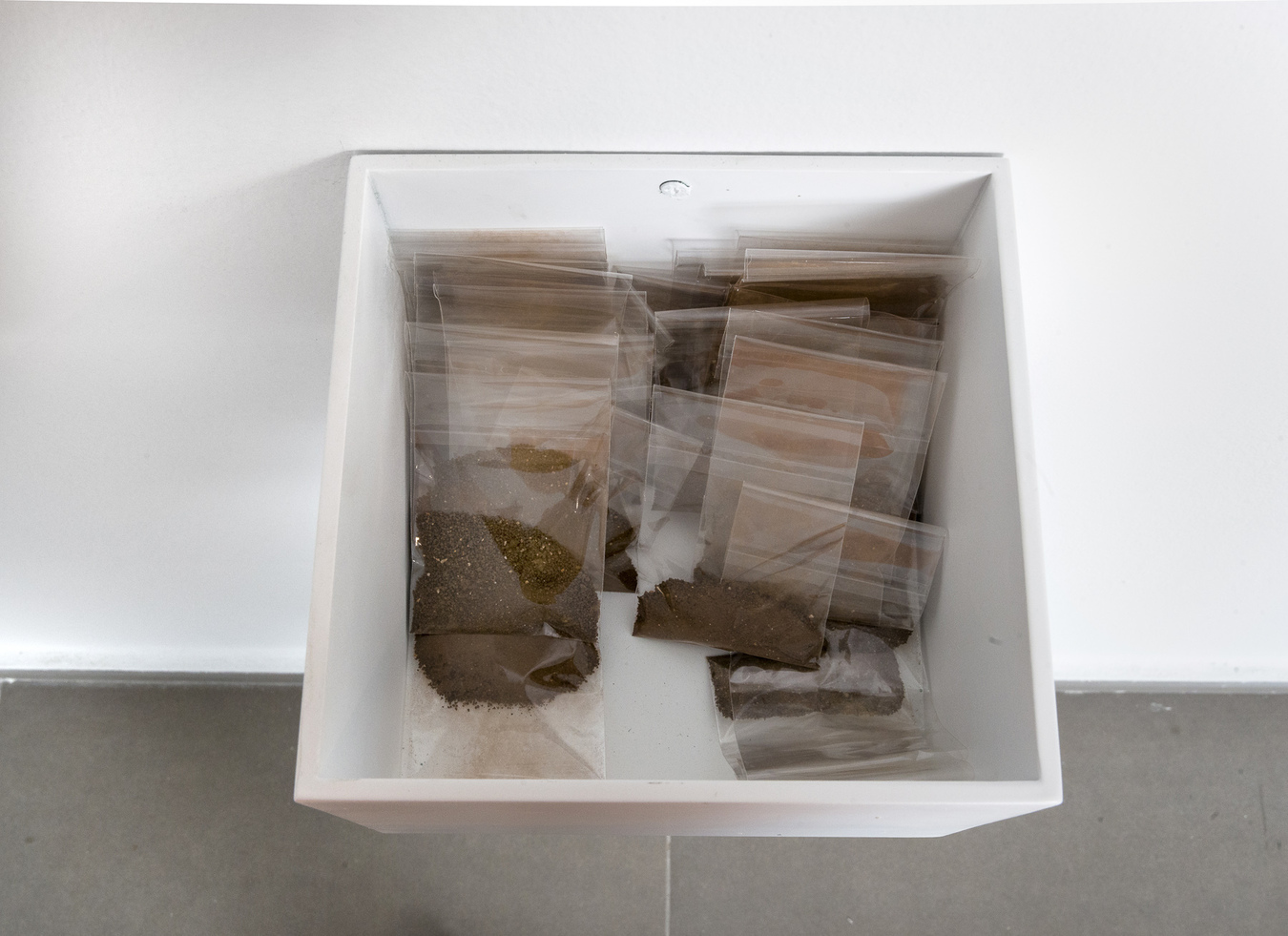
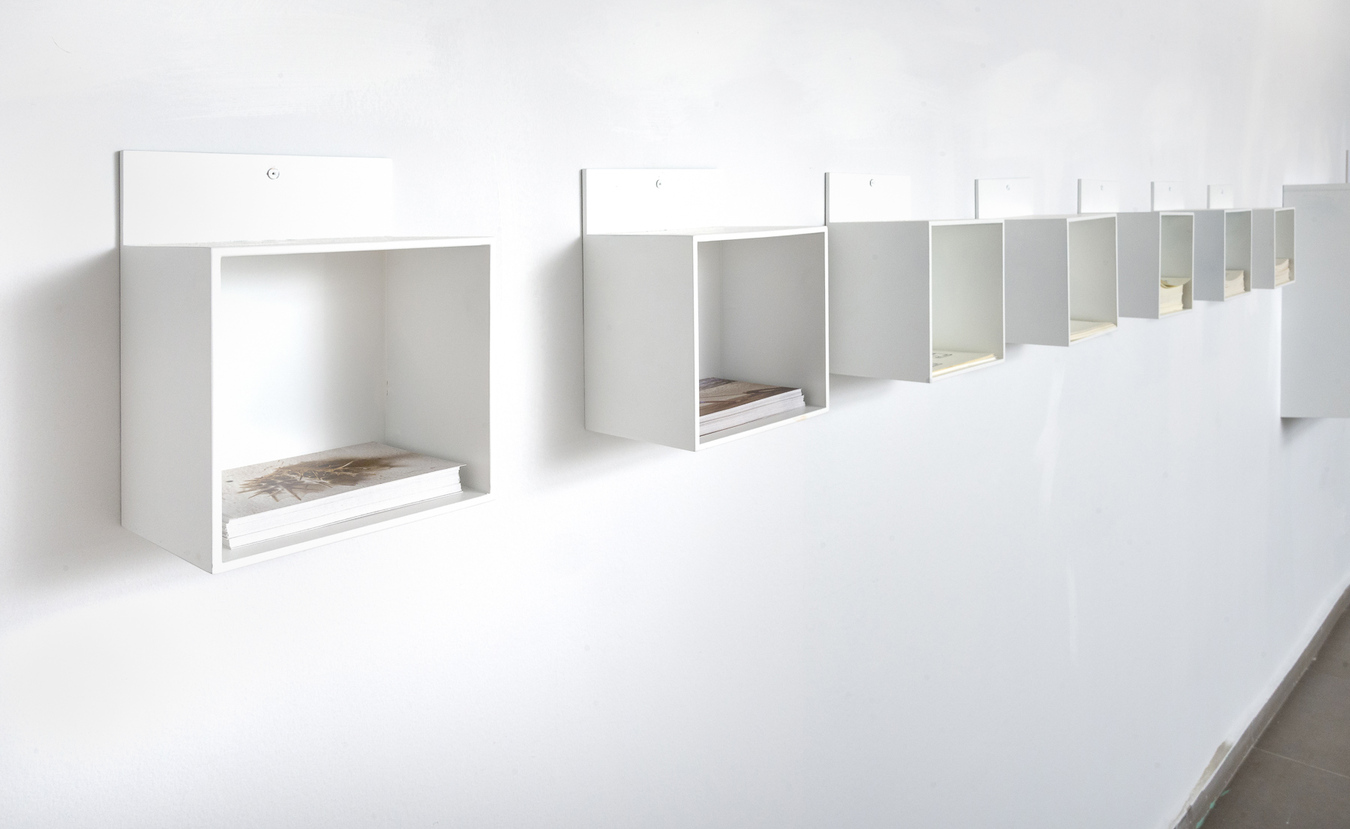
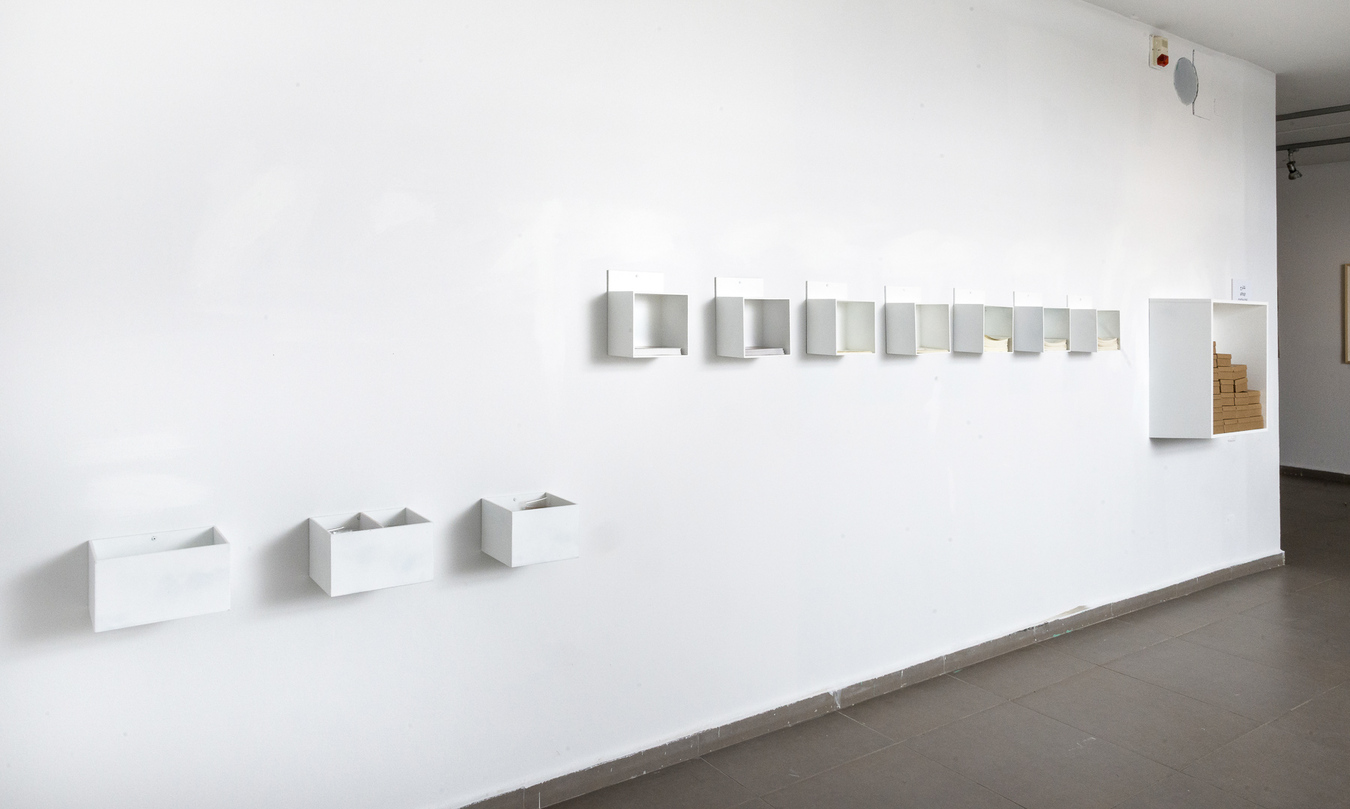
The artist offers us an installation in the centre of the gallery. It directs us to stop, to scan with our eyes, to review the raw materials of the works, to think about the contents and expressions of the composition, the relationships between the object and the artistic creation. Verbally “composition,” means “to put together”. According to that logic and as per the definition of the exhibition, the aesthetics of the composition are magnified and expand with the unification of the shapes. That value flows easily to the viewer. That could not exist without the typical requirements in the works of Zach. The fall into the trap of the beauty of the composition is neither spontaneous nor incidental. There are stages that the viewer’s eye must follow in order to capture that beauty. It is a hard, precise, strict and meticulous work by the artist. Zach succeeds in combining her ideas layer by layer – enabling us to understand it. On the other hand, some of the works remain an enigma.
The unity of the exhibited artworks is reflected in the position of the installation in the middle of the gallery, the pictures, the video works, the use of mass in the space, including the lights and shadows. All these elements are designed by the artist according to her own style, education, culture and seriousness, with the persistence and professionalism required to complete such a project.
Curator: Farid Abu Shakra